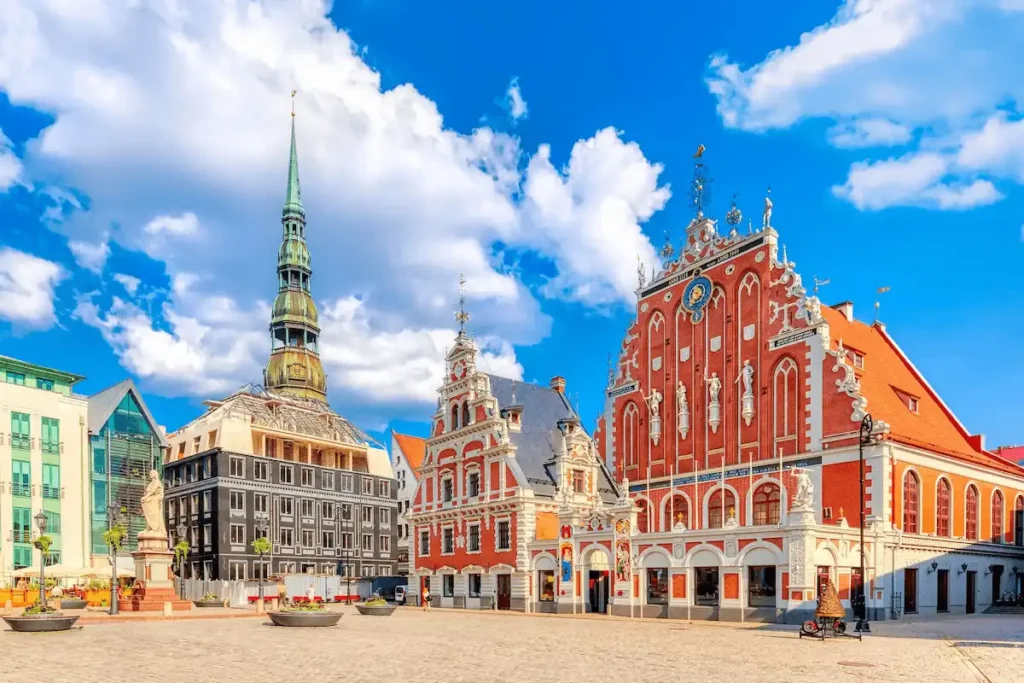
The best historic hotels in Latvia occupy 18th-century port warehouses, Neo-Renaissance estates, and preserved Hanseatic merchant quarters—structures that hold the physical memory of Latvia’s mercantile past, German architectural influence, and Soviet-era preservation neglect. The country’s hotel inventory, however, is overwhelmed by modern business hotels and renovated Soviet-era properties that erase original interiors in favor of generic contemporary design. This creates a significant filtering challenge: most “historic” claims refer to facade preservation only, while the interiors are gutted and replaced with standard hospitality templates that destroy the immersive experience.
We have audited Latvia’s hotel inventory and rejected properties with weak historical continuity, modern reconstructions disguised as heritage conversions, and buildings that lack verifiable 18th- or 19th-century architectural provenance. The properties included here preserve original structural elements—exposed brick masonry, hand-hewn wooden beams, vaulted wine cellars, and authentic Art Nouveau detailing. This is not a comprehensive list; it is a selection of Latvia’s most architecturally significant conversions where the building itself is the primary asset.
The audit guarantees that your stay will be a living history experience, not just a room with a heritage label.
Riga: The Capital’s Merchant Houses & Art Nouveau Conversions
Riga holds the highest concentration of Art Nouveau architecture in Europe and preserves the most significant examples of Hanseatic merchant-quarter conversions in the Baltic region. The city’s historic hotels occupy former guild houses, medieval storage warehouses, and early 20th-century bourgeois palaces—structures that survived both Soviet occupation and post-independence real estate speculation. Unlike the modern glass towers dominating Riga’s skyline, these properties maintain original ornamental facades, vaulted stone cellars, and hand-painted ceiling frescoes that link directly to Riga’s 13th-century German trading past and its 1901-1911 Art Nouveau construction boom.
The three most architecturally significant hotel conversions in Riga are Konventa Sēta Hotel – Keystone Collection (a medieval convent complex with preserved 13th-century masonry and original cloister courtyards), Hotel Gutenbergs (an 1876 bourgeois townhouse with intact Art Nouveau interiors and original wooden staircases), and Grand Palace Hotel – Small Luxury Hotels of the World (an 1877 merchant palace with Empire-style ballrooms and restored 19th-century parquet floors).
Each represents a different architectural chapter of Riga’s past: medieval monastic life, late-19th-century mercantile wealth, and imperial Russian aristocratic influence.
Continue with the full architectural audit of Riga’s merchant-quarter conversions at best hotels in Riga.
🌊 Liepaja & Kuldiga: Port Warehouses and Hanseatic Estates
Liepāja and Kuldīga preserve Latvia’s most architecturally intact 18th- and 19th-century port and trade-route heritage outside the capital.
Liepāja, historically the Latvian Empire’s third-largest city and primary naval base, holds converted merchant warehouses, Neo-Renaissance hotels from the city’s 1880s boom, and Art Nouveau wooden villas that serviced the German Baltic trade network.
Kuldīga, a UNESCO-listed Hanseatic town, maintains one of Latvia’s last surviving merchant-house conversions with documented 17th-century cannonball artifacts and hand-pinned stone foundations. These properties are not resort hotels; they are working historical structures where the original industrial and mercantile architecture remains the dominant aesthetic.
The hotels below represent Latvia’s rarest architectural conversions—properties where the building’s past-life identity is preserved through original timber framing, exposed brick vaults, and documented heritage artifacts integrated into the guest experience.
🏚️ Promenade Hotel Liepaja ★★★★★
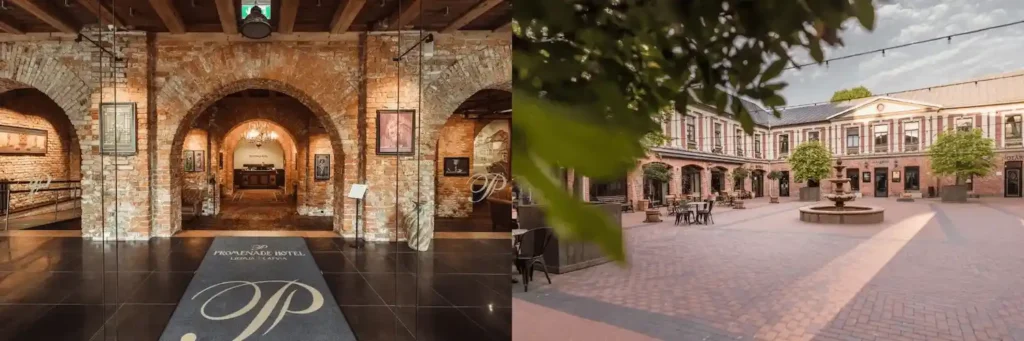
Promenade Hotel Liepaja occupies an 1770 merchant warehouse originally built as a grain storage facility (spīķeris) by German traders Huecke and Witte during Liepāja’s emergence as a primary Baltic trade port.
The structure preserves massive, hand-hewn 18th-century wooden ceiling beams and original floorboards that remain visible throughout the guest rooms and common areas—these are not decorative replicas; they are the structural supports from the warehouse’s active commercial period. The exterior retains its authentic industrial harbor facade with exposed dark red brick masonry that has weathered 250 years of Baltic maritime climate.
The conversion integrates the building’s cargo-handling past with five-star amenities, including a rooftop spa overlooking Liepāja’s port entrance and a fine-dining restaurant occupying the original loading bay.
The experience is entering a structure that once stored the grain that fed northern Europe and finding it transformed into a sanctuary where the industrial soul is protected, not erased.
Best for: Travelers seeking the rarest architectural experience in Latvia—an 18th-century German merchant warehouse with documented provenance and original timber framing.
Signature Experience: Rooftop spa with views over Liepāja’s naval port, fine dining in the original cargo-loading bay, guest rooms with exposed 250-year-old wooden beams, proximity to Latvia’s only historic naval prison and Art Nouveau district.
“Standing in a room where German traders stored grain in 1770—that’s the Latvia I came to see.” — Henrik, CopenhagenCheck Availability & Rates →
🎨 Art Hotel Roma
Art Hotel Roma preserves the 1882 “Hotel de Rome,” a Neo-Renaissance landmark designed by Liepāja’s city architect Paul Max Bertschy during the city’s late-19th-century prosperity as a major Baltic trade center.
The building retains its original “Romas dārzs” (Rome Garden) courtyard—a rare surviving example of 19th-century Latvian urban garden architecture where merchant-class Liepāja gathered for social and business functions. The interior maintains exposed 19th-century brickwork and a massive vaulted wine cellar that now functions as an art gallery, preserving the structure’s original storage function while integrating contemporary Baltic art. The guest rooms occupy the hotel’s historic upper floors, where period windows overlook the pedestrian Old Town and original wooden trim frames the sleeping quarters.
This is an active historical building where the 1882 architecture and its merchant-era social infrastructure remain the defining features.
Best for: Travelers drawn to Neo-Renaissance merchant culture and properties where 19th-century social spaces—courtyards, vaulted cellars, garden quarters—are preserved as functional guest areas.
Signature Experience: Original “Rome Garden” courtyard access, wine cellar art gallery in vaulted 19th-century storage space, exposed brick interiors, Old Town pedestrian zone location with direct access to Liepāja’s naval heritage quarter.
“That wine cellar gallery—original 1882 brick and modern Baltic art together in one space.” — Laura, BerlinCheck Availability & Rates →
🏛️ Hotel Vilhelmine
Hotel Vilhelmine occupies a 19th-century residential building on Latvia’s national Historical Heritage list, representing Liepāja’s trade-boom era when merchant families commissioned private townhouses near the port district.
The building retains its original ornate wooden staircase and historic room layouts—these are not reconstructed elements; they are the actual architectural features from the home’s active residential period. The interior preserves 19th-century proportions, with high ceilings, period window frames, and original floorboards that creak with over a century of use. Guest rooms feature curated 19th-century maps and photography from Liepāja’s peak as a Latvian-German trade hub, creating an immersive archive experience rather than generic hotel decoration.
Location: within walking distance of Liepāja’s Art Nouveau district and the 1890s Karosta naval base, positioning guests at the center of Latvia’s maritime heritage corridor.
Best for: Travelers prioritizing residential heritage and properties where 19th-century private-home architecture—wooden staircases, original room layouts, period flooring—remains intact.
Signature Experience: Original ornate wooden staircase, curated 19th-century trade-era maps and photography, preserved room layouts from the building’s residential past, proximity to Liepāja’s Art Nouveau district and Karosta naval heritage site.
“Walking those original wooden stairs every morning felt like stepping into a merchant family’s private world.” — Eva, StockholmCheck Availability & Rates →
🌊 Roze Boutique Hotel ★★★★
Roze Boutique Hotel preserves a 1912 seaside Art Nouveau wooden villa originally built as a private summer residence during Liepāja’s Belle Époque period when the city functioned as Latvia’s premier Baltic resort.
The restoration specifically retained the original 20th-century wooden stairs, painted wall ornaments, and authentic stained-glass windows—elements that define early Art Nouveau residential architecture in the Latvian coastal tradition. The facade follows the original 1912 architectural proportions with decorative wooden trim and period color schemes that distinguish it from modern beach hotels. The interior maintains the villa’s original room divisions and high ceilings, creating guest quarters that feel like private chambers in a preserved family estate.
The property sits 300 meters from Liepāja’s public beach, positioning guests in the exact location where Latvia’s German-Baltic merchant class summered over a century ago.
Best for: Travelers seeking Art Nouveau seaside villa heritage and properties where original wooden architecture—stairs, wall ornaments, stained glass—defines the interior aesthetic.
Signature Experience: Original 1912 wooden stairs and stained-glass windows, preserved Art Nouveau painted wall ornaments, seaside villa architecture 300 meters from Liepāja’s historic beach, period room divisions and high ceilings from the building’s Belle Époque residential past.
“That stained glass in the morning light—pure 1912 Art Nouveau craftsmanship, untouched.” — Anna, VilniusCheck Availability & Rates →
⚔️ SĪMANIS Boutique Hotel
SĪMANIS Boutique Hotel occupies a restored “Sīmaņmāja” in Kuldīga’s UNESCO-listed Hanseatic Old Town, representing one of Latvia’s rarest examples of 19th-century merchant-house architecture outside Riga.
The building features massive exposed oak beams and hand-pinned stone foundations that date to the structure’s original construction as a trading family’s residence and storage facility. A 17th-century cannonball recovered during the restoration is displayed in the lobby—this is not decorative theater; it is a documented artifact from Kuldīga’s role in the Northern Wars and serves as physical proof of the building’s multi-century history.
The interior preserves low ceilings, uneven floor levels, and narrow staircases that reflect medieval Hanseatic construction standards rather than modern comfort requirements. The hotel sits 200 meters from Kuldīga’s Venta Rapid (Europe’s widest waterfall) and the historic brick bridge, positioning guests in the heart of Latvia’s best-preserved medieval trade town.
Best for: Travelers prioritizing Hanseatic merchant heritage and properties where medieval construction methods—oak beams, stone foundations, documented war artifacts—are preserved and explained.
Signature Experience: 17th-century cannonball artifact display, exposed oak beams and hand-pinned stone foundations, UNESCO-listed Hanseatic Old Town location, 200 meters from Venta Rapid and historic brick bridge, medieval room proportions and original staircase architecture.
“Seeing that 17th-century cannonball in the lobby—suddenly Kuldīga’s war history became real.” — Markus, HamburgCheck Availability & Rates →
Stay in Latvia’s Castle Hotels
📊 Comparison: Best Historic Hotels in Latvia
| Hotel | Location | Wellness & Spa | Dining | Unique Perks | Best For |
|---|---|---|---|---|---|
|
🏚️ Promenade Hotel Liepaja ★★★★★ |
Liepāja, port district |
Rooftop spa, maritime views |
Fine dining, original loading bay |
1770 grain warehouse Hand-hewn timber beams |
18th-century German merchant heritage |
|
🎨 Art Hotel Roma |
Liepāja, Old Town |
Standard wellness | Restaurant, courtyard dining |
1882 Neo-Renaissance Vaulted wine cellar gallery |
Merchant-era social architecture |
|
🏛️ Hotel Vilhelmine |
Liepāja, heritage quarter |
Not available | Breakfast room | 19th-century townhouse Original wooden staircase |
Residential heritage immersion |
❓ FAQ: Best Historic Hotels in Latvia
What makes a hotel in Latvia historically significant?
A historically significant hotel in Latvia occupies a building with documented 18th- or 19th-century provenance—former merchant warehouses, Hanseatic townhouses, Neo-Renaissance estates, or Art Nouveau villas—where original structural elements like hand-hewn beams, exposed brick masonry, or vaulted cellars remain intact. Properties claiming “historic” status based solely on facade preservation without interior continuity do not meet this standard. Promenade Hotel Liepaja’s 1770 grain warehouse with preserved timber framing represents the highest level of architectural integrity.
Which Latvian city has the best historic hotels?
Riga holds the largest concentration of architecturally significant hotel conversions, including medieval convent complexes, Art Nouveau bourgeois palaces, and 19th-century merchant quarters. Liepāja, however, preserves Latvia’s rarest 18th-century port warehouse conversion (Promenade Hotel Liepaja) and the most intact Neo-Renaissance hotel from the city’s 1880s trade boom (Art Hotel Roma). Kuldīga offers the only Hanseatic merchant-house conversion outside Riga with documented 17th-century war artifacts (SĪMANIS Boutique Hotel).
Are historic hotels in Latvia more expensive than modern hotels?
Not necessarily. Latvia’s historic hotel pricing reflects architectural rarity and preservation quality, not generic luxury positioning. An 1770 merchant warehouse conversion (Promenade Hotel Liepaja) commands premium rates due to its unique provenance, while 19th-century residential heritage properties (Hotel Vilhelmine) often price below modern business hotels despite superior architectural authenticity. Value is determined by the building’s documented past-life identity, not star ratings or contemporary amenities.
Do historic hotels in Latvia preserve original architectural elements?
The best historic hotels in Latvia preserve original structural elements—hand-hewn 18th-century wooden beams (Promenade Hotel Liepaja), vaulted 19th-century wine cellars (Art Hotel Roma), original wooden staircases (Hotel Vilhelmine), and authentic Art Nouveau stained glass (Roze Boutique Hotel). Properties that gut interiors and retain only external facades do not qualify as true heritage conversions. SĪMANIS Boutique Hotel displays a 17th-century cannonball recovered during restoration as documented proof of the building’s war history.
What is the oldest hotel building in Latvia?
Promenade Hotel Liepaja occupies the oldest documented hotel structure in this audit—an 1770 grain warehouse built by German merchants Huecke and Witte during Liepāja’s emergence as a Baltic trade port. The building preserves massive hand-hewn wooden ceiling beams and original floorboards from its active commercial period, making it Latvia’s rarest 18th-century architectural conversion. Riga’s Konventa Sēta Hotel contains 13th-century monastic masonry, but functions as part of a larger medieval complex rather than a single-use structure.
Should I stay in Riga or Liepāja for historic architecture?
Riga offers the highest density of Art Nouveau and medieval Hanseatic architecture in one location, with the most hotel options occupying former guild houses, merchant palaces, and convent complexes. Liepāja preserves the rarest 18th-century German merchant warehouse conversion in Latvia (Promenade Hotel Liepaja) and provides access to the country’s most intact Art Nouveau wooden villa district and Soviet-era Karosta naval base. Travelers prioritizing a single, architecturally exceptional property should choose Liepāja; those seeking variety within walking distance should choose Riga.
Do Latvian historic hotels include wellness facilities?
Promenade Hotel Liepaja integrates a rooftop spa with maritime views into its 1770 warehouse structure, offering the most architecturally distinctive wellness experience in Latvia. Art Hotel Roma and Hotel Vilhelmine do not feature dedicated spa facilities but preserve original 19th-century courtyards and garden spaces as tranquil guest areas. Roze Boutique Hotel maintains its 1912 seaside villa architecture with direct beach access. Travelers prioritizing wellness amenities should select Promenade Hotel Liepaja or continue with Riga’s full audit, which includes properties with restored Art Nouveau bathhouse heritage.
Choosing the Right Historic Hotel in Latvia
You now hold Latvia’s most architecturally vetted hotel selection—properties that occupy 18th-century port warehouses, Neo-Renaissance merchant estates, and Hanseatic townhouses where the original structure defines the guest experience. These are not generic heritage claims; they are documented conversions where hand-hewn beams, vaulted wine cellars, and recovered war artifacts prove the building’s multi-century history. The filtering work is complete. Your decision now depends on which chapter of Latvia’s past you want to inhabit—the German merchant port trade, the Belle Époque resort culture, or the medieval Hanseatic trading network.
Explore the best historic hotels in Lithuania for 19th-century merchant-house conversions and Art Nouveau manor estates across the broader Baltic region, or continue with the best historic hotels in Estonia for medieval Hanseatic guild houses and Soviet-era adaptive reuse landmarks.
For more curated itineraries and luxury-focused travel insights, visit Your Luxury Guide. For official travel information and destination updates, visit Latvia tourism-info.
Booking a stay at Latvia’s historic hotels places you inside the country’s most architecturally significant conversions—structures where the physical past is preserved, not merely referenced.
Your Luxury Guide — Where Exceptional Travel Begins.