Best historic hotels in Ireland aren’t just places to sleep—they’re former seats of power, Palladian estates, and Georgian townhouses that defined the country’s aristocratic era.
Choosing the right property means understanding the difference between Dublin’s urbane, 18th-century sophistication and the grand, rural estates scattered across Kildare, Kilkenny, and Kerry—each offering a distinct taste of Ireland’s gentry past.
After filtering through the country’s most historically significant accommodations, we’ve narrowed the field to properties that deliver on architectural integrity, service caliber, and genuine historical status—not just renovated buildings with “heritage” in the marketing copy.
Below are the stays that make sense if you value authenticity and cultural depth. These aren’t castle conversions (we cover those separately)—these are the manor houses, banking halls, and Regency estates that shaped Ireland’s social and economic landscape.
The Dublin’s Historic & Heritage Collection
Dublin’s heritage isn’t found in castles—it’s behind the colorful doors of Georgian townhouses and within the grand banking halls that once controlled Ireland’s Victorian economy. The city’s architectural legacy centers on the 18th century, when Dublin ranked as Europe’s second city and its elite built townhouses that balanced Palladian proportion with Irish social flair.
These properties offer urban sophistication and cultural access, positioning guests within walking distance of museums, theaters, and the Georgian squares that define the capital’s identity.
While Dublin delivers refined city stays, the manor estates beyond offer something entirely different—the sprawling grounds, private sporting estates, and Regency-era grandeur that defined Ireland’s landed gentry.
Explore the Full Collection: The 4 Best Historic Hotels in Dublin
The Grand Manor Estates & Country Houses
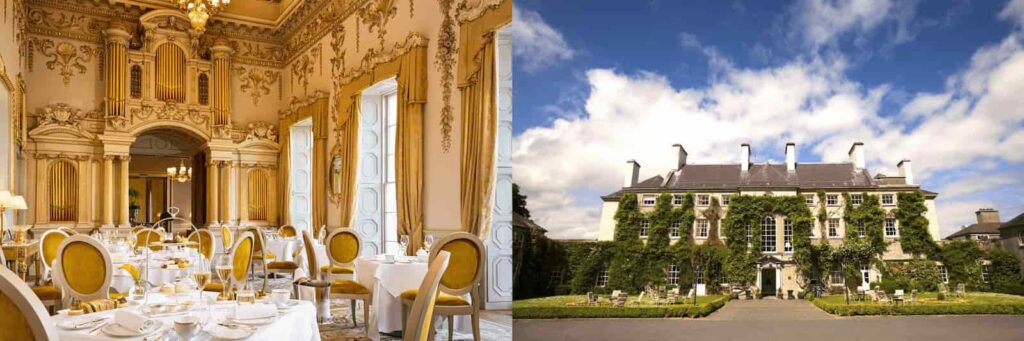
Beyond Dublin’s Georgian facades, Ireland’s true aristocratic legacy lives on in the Palladian manors and country estates that once functioned as self-contained worlds—complete with private chapels, walled gardens, and championship golf courses that were status symbols long before modern luxury tourism existed.
These properties aren’t about proximity to attractions; they are the attraction.
Each estate below represents a different era of Irish gentry life, from 18th-century hunting lodges to Victorian sporting retreats that hosted European royalty.
What unifies them is architectural integrity, expansive grounds that justify multi-day stays, and service standards rooted in country-house tradition rather than corporate hospitality templates.
🏛️ Cashel Palace Hotel ★★★★★
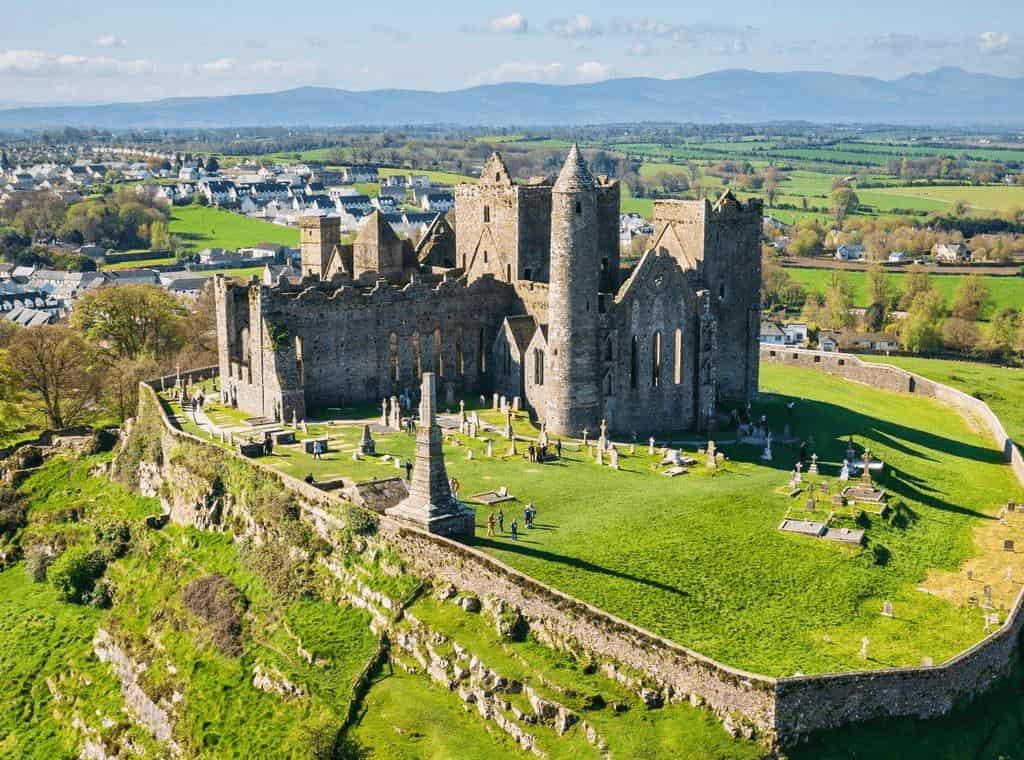
Cashel Palace isn’t competing with other Irish hotels—it’s competing with the Rock of Cashel itself, the medieval fortress visible from every window. Built in 1730 as the Archbishop of Cashel’s residence, the property retains its Queen Anne architecture, original plasterwork ceilings, and private grounds that include a bishop’s walk through walled gardens.
This is Ireland’s most historically loaded location, where the building’s ecclesiastical past meets contemporary spa culture in a property that never apologizes for its grandeur. The positioning is surgical: couples and history-conscious travelers who want architectural significance without castle clichés.
Service feels residential rather than hotel-standard, with staff who understand that guests here aren’t looking for generic luxury—they’re after the rarest combination of location, heritage, and refinement in the Irish countryside.
Best for: Travelers seeking Ireland’s most iconic landmark location with Queen Anne architecture, where medieval history frames every view and ecclesiastical elegance defines the stay.
Signature Experience: Private walled gardens with bishop’s walk, Spa at the Palace with original vaulted ceilings, fine dining in the former Archbishop’s dining hall, direct Rock of Cashel views from Palladian windows.
“Waking up to the Rock of Cashel outside your window—no other hotel in Ireland can claim that view.” — Michael, EdinburghCheck Availability & Rates →
🏰 Carton House, A Fairmont Managed Hotel ★★★★★
Carton House represents the apex of Irish Palladian architecture—a 1,100-acre estate that served as the seat of the Dukes of Leinster and remains one of Ireland’s most intact 18th-century properties.
The estate’s scale is what separates it from boutique manor conversions: two championship golf courses designed by Colin Montgomerie and Mark O’Meara, formal gardens that influenced landscape design across Europe, and a neoclassical main house that feels more like a private aristocratic residence than a hotel.
This works for travelers who want sporting amenities alongside heritage—guests here split time between the Carton House Spa, the estate’s fly-fishing river, and rooms that overlook grounds designed by Capability Brown’s protégé. It’s not intimate, but that’s the point. This is where Ireland’s landed aristocracy entertained at scale.
Best for: Active luxury travelers seeking Ireland’s grandest Palladian estate, where championship golf, expansive grounds, and aristocratic architecture converge on a property that defined 18th-century Irish taste.
Signature Experience: Two championship golf courses on ancestral lands, Capability Brown-influenced gardens, Thai-inspired Carton House Spa in original estate buildings, fly-fishing on the River Rye.
“The estate’s sheer scale makes you understand why the Fitzgeralds were Ireland’s premier family for centuries.” — James, BostonCheck Availability & Rates →
🌳 Mount Juliet Estate, Autograph Collection ★★★★★
Mount Juliet functions as a self-contained Irish country estate where the original 1,500-acre grounds remain largely intact, complete with Jack Nicklaus-designed championship golf, equestrian facilities, and formal gardens that predate the property’s conversion to hospitality.
The Georgian manor house anchors the estate, but this isn’t a museum stay—Autograph Collection’s management ensures contemporary spa facilities, Michelin-level dining at Lady Helen Restaurant, and accommodations that balance period architecture with modern luxury standards.
What makes this property work is its sporting heritage: the estate hosted international equestrian events long before it became a hotel, and that legacy still shapes the guest experience. Travelers here aren’t choosing between golf or spa—they’re accessing a lifestyle estate where both exist at championship level.
The positioning is clear: this suits guests who want activity-focused luxury within a historic framework, not passive sightseeing.
Best for: Golf-focused travelers and equestrian enthusiasts seeking a Georgian sporting estate where Jack Nicklaus-designed courses, Michelin dining, and authentic country-house tradition create Ireland’s most complete luxury experience.
Signature Experience: Jack Nicklaus-designed championship golf, Lady Helen Michelin-star dining in Georgian salon, Irish National Stud-affiliated equestrian center, Sense Spa in restored estate buildings.
“That final hole overlooking the manor house—Nicklaus knew exactly what he was doing when he routed the course.” — Patrick, SydneyCheck Availability & Rates →
🏌️ The K Club ★★★★★
The K Club built its reputation hosting the 2006 Ryder Cup, but the property’s history predates its golf fame—the original 19th-century manor served as a private estate before Arnold Palmer redesigned the grounds into one of Europe’s most challenging championship courses.
What separates this property from resort-style golf hotels is its country-house foundation: the Straffan estate’s original architecture remains intact, with period interiors, river frontage along the Liffey, and service that reflects Irish country-house tradition rather than corporate golf hospitality.
The positioning targets serious golfers who won’t compromise on accommodation quality—guests here expect both PGA-level course conditions and manor-house refinement in equal measure. The property’s dual identity (sporting venue + heritage estate) works because neither element feels secondary.
This is a historic Irish estate that happens to host one of Europe’s most prestigious courses.
Best for: Serious golfers seeking Ryder Cup-level course conditions within a 19th-century manor estate, where Arnold Palmer’s design and Irish country-house service create a rare balance of sporting excellence and heritage refinement.
Signature Experience: 2006 Ryder Cup course designed by Arnold Palmer, River Liffey salmon fishing, K Spa with hydrotherapy pool, Legends Restaurant in Georgian manor setting.
“Playing the same fairways as the Ryder Cup legends, then dining in that manor house—it’s the complete Irish golf pilgrimage.” — David, TorontoCheck Availability & Rates →
🌲 Muckross Park Hotel & Spa ★★★★★
Muckross Park sits on the edge of Killarney National Park, positioning guests at the gateway to Ireland’s most dramatic natural landscape while maintaining the architectural grace of a Victorian country house. The property’s history lies in its location and design—built in the era when Ireland’s gentry used Kerry as a sporting and leisure retreat, the hotel retains period details like hand-carved woodwork and original fireplaces while delivering contemporary spa facilities and Michelin-level dining at Yew Tree Restaurant.
What makes this work is the balance: you’re staying in a historic property with direct access to wilderness that feels untouched by modern tourism. The National Park’s lakes, mountains, and ancient woodlands are minutes away, but the hotel itself offers spa treatments, afternoon tea service, and accommodations that never sacrifice comfort for authenticity.
This suits travelers who want Kerry’s natural drama paired with refined country-house hospitality—not a wilderness lodge, but an elegant estate that uses its National Park location as the ultimate amenity.
Best for: Nature-focused luxury travelers seeking Victorian elegance at the gateway to Killarney National Park, where Michelin dining, contemporary spa facilities, and Ireland’s most dramatic landscapes converge.
Signature Experience: Edge-of-National-Park location with ancient woodland access, Inis Spa with outdoor hot tub overlooking gardens, Yew Tree Michelin-star dining, Victorian drawing rooms with hand-carved period details.
“That morning walk into the National Park, then returning to afternoon tea in the Victorian salon—Kerry at its finest.” — Emma, LondonCheck Availability & Rates →
The Fortress Collection: Ireland’s Royal Castles
📊 Comparison: Historic Hotels in Ireland
| Hotel | Location | Heritage | Signature | Golf | Best For |
|---|---|---|---|---|---|
|
🏛️ Cashel Palace Hotel ★★★★★ |
Cashel, Tipperary |
1730 Archbishop’s residence |
Rock of Cashel views, Queen Anne |
None | History-focused, iconic location |
|
🏰 Carton House ★★★★★ |
Maynooth, Kildare |
1739 Duke of Leinster seat |
1,100-acre estate, Capability Brown |
Two championship courses |
Active estates, Palladian scale |
|
🌳 Mount Juliet Estate ★★★★★ |
Thomastown, Kilkenny |
Georgian sporting estate |
Michelin dining, equestrian center |
Jack Nicklaus championship |
Golf & equestrian, lifestyle estate |
❓ FAQ: Best Historic Hotels in Ireland
Which hotel in Ireland has the most historic significance?
Cashel Palace Hotel is the standout, originally serving as the Archbishop of Cashel’s residence in 1730. It retains original Queen Anne plasterwork, ecclesiastical gardens, and direct views of the Rock of Cashel, making it the top choice for travelers seeking Ireland’s most iconic heritage location with verified architectural pedigree.
Do Ireland’s historic hotels require stays longer than one night?
Properties like Carton House and Mount Juliet Estate are designed for multi-day experiences—their 1,100-acre and 1,500-acre grounds, championship golf courses, and sporting facilities justify extended stays. Cashel Palace works for overnight historic-focused visits, but the manor estates reward guests who allocate time to explore their full amenity offerings.
Are these historic hotels suitable for non-golfers?
Absolutely. While Carton House, Mount Juliet, and The K Club feature championship golf, their spa facilities, equestrian centers, gardens, and Michelin dining attract guests who never touch a club. Cashel Palace and Muckross Park Hotel offer pure heritage and natural landscape experiences without any sporting emphasis.
What’s the difference between Irish historic hotels and castle conversions?
Historic hotels represent Palladian manors, Georgian estates, and ecclesiastical residences—properties that defined Ireland’s aristocratic and social history. Castle conversions focus on medieval fortifications. Heritage properties offer refined architectural elegance and sporting estates; castles deliver defensive architecture and tower rooms. Different historical eras, different guest experiences.
Which Irish historic hotel offers the best spa facilities?
Mount Juliet Estate’s Sense Spa and Muckross Park Hotel’s Inis Spa both deliver contemporary facilities within historic settings. Mount Juliet integrates spa treatments with its sporting estate identity, while Inis Spa uses its Killarney National Park location to create a nature-focused wellness experience. Carton House’s Thai-inspired spa offers the most unique cultural approach.
Can you visit the Rock of Cashel from Cashel Palace Hotel?
Yes—the Rock of Cashel sits directly adjacent to the hotel grounds, visible from palace windows and accessible via a short walk through the town. This proximity is Cashel Palace’s defining advantage: you’re staying in the Archbishop’s former residence with Ireland’s most iconic medieval site as your literal backyard. No other heritage hotel in Ireland offers comparable historical layering.
Do these properties accept children?
Policies vary by property. Carton House and Mount Juliet Estate welcome families with dedicated children’s programs and expansive grounds for activities. Cashel Palace maintains a more refined adult-focused atmosphere. Always verify age policies and family amenities via booking links, as heritage properties often balance family access with maintaining their country-house ambiance for guests seeking quieter experiences.
Final Selection: Find best Ireland’s Historic Hotel
Booking the right historic hotel in Ireland isn’t about collecting stars—it’s about choosing properties where architectural legacy and Irish aristocratic tradition create experiences that justify rates beyond standard luxury.
The estates above represent the most historically significant and operationally refined options for travelers who value authenticity, sporting heritage, and country-house service that feels residential rather than corporate. Availability at this level shifts quickly during peak season, particularly at properties like Cashel Palace where location and architecture converge uniquely.
For travelers seeking medieval fortifications rather than manor estates, explore the finest historic hotels in the United Kingdom for castle conversions across England, Scotland, and Wales. Those drawn to Palladian grandeur on the continent should continue with the best heritage collection in France, where château conversions offer a different expression of aristocratic legacy.
For more curated itineraries and luxury-focused travel insights, visit Your Luxury Guide. For official travel information and destination updates, visit Ireland tourism-info.
Book your historic stay in Ireland to secure the manor estates, sporting grounds, and ecclesiastical landmarks where Irish history shapes every moment.
Your Luxury Guide — Where Exceptional Travel Begins.