Finding the best historic hotels in Hungary means filtering out the corporate renovations and glass-skinned brand expansions that dominate most “luxury” searches. Hungary’s inventory is saturated with high-thread-count marketing that hides structurally generic interiors—properties where the building itself has no soul, no recorded past, and no reason to exist beyond proximity to a thermal spring or a riverbank view.
We audited Hungary’s hotel stock to identify assets with verified architectural provenance: 18th-century Baroque postal stations, neoclassical ballrooms that hosted the Anna Ball for two centuries, and steam-era industrial conversions where the original timber framework remains visible. This selection rejects weak modern overlays and prioritizes properties where the “Past-Life Identity” is the defining feature of the stay.
The result is a curated list that saves you from booking a soulless room and guarantees an experience rooted in Hungary’s Reform Era grandeur and Habsburg-influenced architectural legacy. You’re not booking a hotel—you’re securing access to buildings that predate the nation itself.
Budapest: Imperial Palaces & Bank Vault Conversions
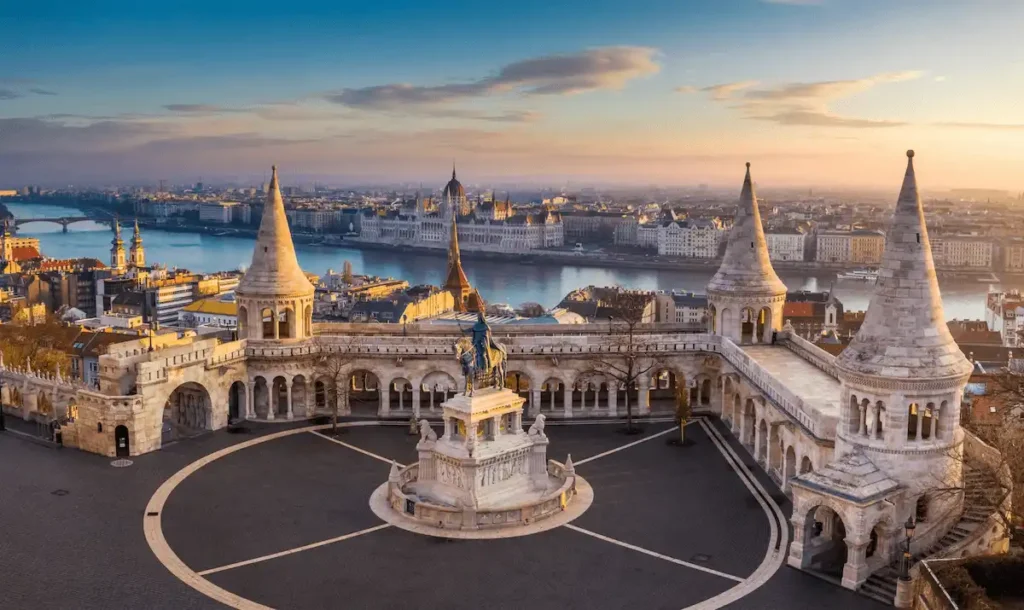
Hungary’s capital operates on a separate tier of architectural power—properties so monumentally significant they command their own dedicated audit. Budapest’s hotel inventory includes palatial assets designed by Habsburg-commissioned architects, riverside conversions that housed national banking headquarters, and belle époque structures where every ballroom once hosted Europe’s titled elite. These are not “historic hotels”—they are classified national landmarks repurposed for overnight stays. The structural scale, the preserved Jugendstil mosaics, the original vault interiors, and the sheer institutional weight of these buildings justify Budapest’s separation from the provincial audit.
Imperial Palaces & Riverside Conversions
Four Seasons Hotel Gresham Palace Budapest (1906 Art Nouveau palace with Zsolnay tile mosaics and original ironwork), Anantara New York Palace Budapest (1894 Italian Renaissance palace commissioned by the New York Life Insurance Company), Matild Palace, a Luxury Collection Hotel (1902 Habsburg-era residential palace with original grand staircase and belle époque frescoes).
For the full Budapest audit, including structural assessments of vault conversions, neoclassical ballroom restorations, and riverside merchant palace continuity, read best hotels in Budapest.
Lake Balaton & Neoclassical Spa Towns
Hungary’s spa-town heritage centers on the thermal-resort culture that flourished during the 19th-century Habsburg wellness movement. These are not modern wellness hotels retrofitted with “spa” amenities—they are original neoclassical institutions where aristocratic Europe came for extended seasonal stays. The architecture reflects the Reform Era’s obsession with classicist symmetry, grand ballrooms, and curative ritual.
🎭 Anna Grand Hotel ★★★★★
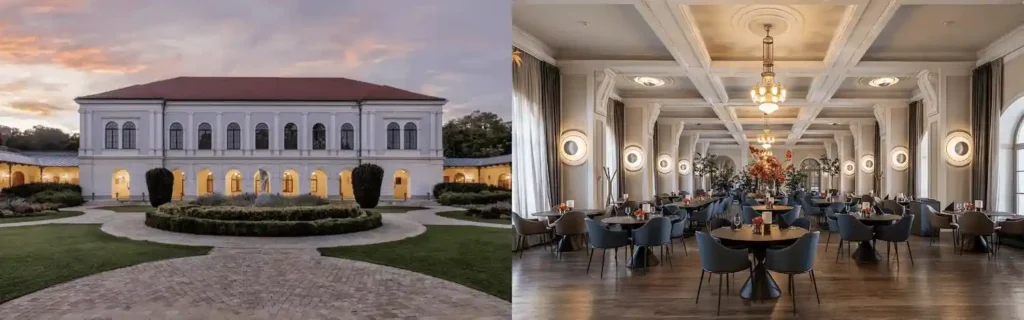
The official host of the Anna Ball since 1824, this 1786 neoclassical landmark in Balatonfüred is the oldest continuously operating spa hotel in Hungary. Originally commissioned as a curative retreat during the Habsburg thermal wellness movement, it retains the grand ballroom where aristocratic Europe gathered for two centuries of recorded social history.
The preserved classicist “Blaha Lujza” wing maintains the structural elegance of the Reform Era, with original marble floors, gilded ceiling moldings, and tall arched windows overlooking Lake Balaton. Modern rooms integrate seamlessly into the historic envelope, offering lake views framed by 19th-century ironwork balconies. The transition from the main promenade into the hotel’s marble-columned lobby feels like entering a living chapter of Hungarian aristocratic ritual.
No other property in the Balaton region can claim this level of institutional continuity—this is the only hotel where the Anna Ball has been held without interruption for 200 years.
Best for: Travelers seeking neoclassical grandeur with verified institutional continuity, spa wellness rooted in 18th-century curative tradition, and direct access to the Anna Ball’s historic ballroom.
Signature Experience: Original 19th-century grand ballroom, lakefront thermal spa with Habsburg-era wellness rituals, neoclassical marble colonnade, private balconies overlooking Lake Balaton.
“Standing in that ballroom where the Anna Ball has been held since 1824—it’s not nostalgia, it’s institutional power.” — Katalin, ViennaCheck Availability & Rates →
Provincial Baroque & Esterházy Commissions
The Esterházy family‘s architectural patronage shaped Hungary’s Baroque landscape, commissioning structures that now serve as some of the nation’s most significant heritage conversions. These are not decorative “old buildings”—they are Habsburg-commissioned projects designed by architects like Jakab Fellner, preserving original vaulted cellars, Baroque carriage entrances, and structural elements from the Vienna-Buda post-route era.
🏛️ Hotel Kristály Imperial ★★★★
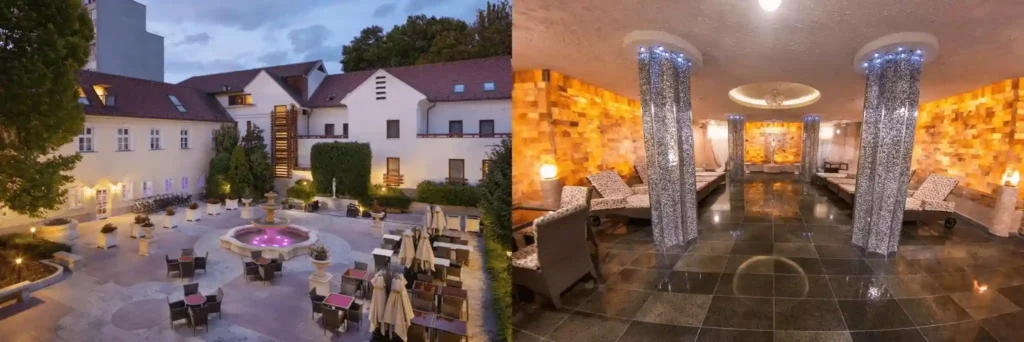
The oldest continuously functioning hotel in Hungary, this 1770 Baroque landmark in Tata was commissioned by the Esterházy family and designed by Jakab Fellner as part of the Vienna-Buda post-route infrastructure.
The original 18th-century cross-vaulted cellars remain structurally intact, preserved beneath the hotel’s modern wellness facilities. The Baroque carriage entrance—where postal coaches once arrived from Vienna—still serves as the main entry, with original stone archways and ironwork gates. Rooms integrate into the historic envelope without compromising the building’s Baroque proportions, maintaining high ceilings, thick masonry walls, and tall arched windows. The transition from Tata’s main square into the hotel’s vaulted stone lobby feels like stepping into a preserved chapter of Habsburg postal history.
No other hotel in the region can claim this level of architectural continuity—this is the only property where the original Fellner-designed structure remains in daily operation.
Best for: Architecture enthusiasts drawn to verified Esterházy commissions, travelers seeking Baroque institutional continuity, and guests prioritizing structural authenticity over modern brand affiliation.
Signature Experience: Original 18th-century cross-vaulted cellars, Baroque carriage entrance from the Vienna-Buda post-route, Fellner-designed stone archways, thermal wellness facilities integrated into historic envelope.
“Walking through those vaulted cellars from 1770—it’s not a replica, it’s the actual space where postal coaches stopped.” — László, BudapestCheck Availability & Rates →
Szeged: Post-Flood Eclectic & Restored Baroque Townhouses
Szeged’s architectural identity was reshaped by the Great Flood of 1879, which destroyed most of the medieval city center and triggered a reconstruction movement that produced some of Hungary’s most significant eclectic and Biedermeier-style buildings. The properties in this grouping represent both pre-flood Baroque survivals and post-flood institutional reconstructions, offering access to preserved concert halls, original marble columns, and meticulously restored 18th-century townhouse interiors.
🎶 Tisza Hotel ★★★
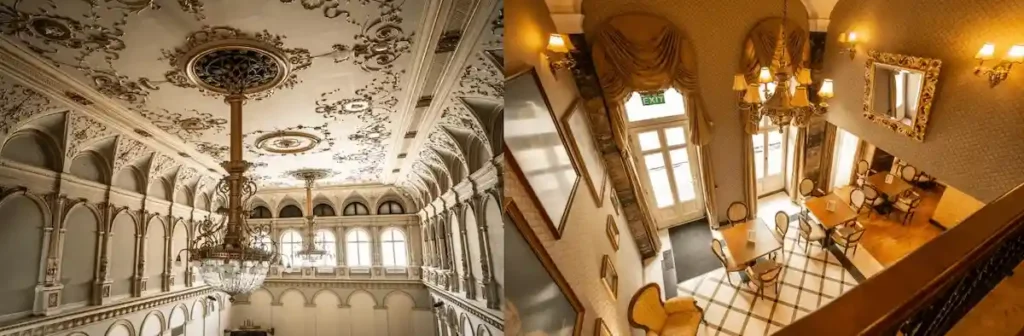
This 1885 eclectic landmark on Széchenyi Square was built immediately following the Great Flood of 1879 as part of Szeged’s institutional reconstruction. The hotel’s “Concert Hall” remains original, featuring 19th-century marble columns and gold-leaf mirrors installed when Franz Liszt performed here during the building’s opening season.
The eclectic façade blends neoclassical symmetry with Hungarian folk motifs, a hallmark of the post-flood architectural movement. Rooms integrate into the historic structure without disrupting the building’s original proportions, maintaining high ceilings and tall arched windows overlooking the square. The transition from Szeged’s main plaza into the hotel’s marble-columned lobby feels like entering a preserved chapter of the city’s cultural renaissance. No other hotel in Szeged can claim this level of recorded cultural continuity—this is the only property where Liszt’s original performance space remains intact.
Best for: Culturally-minded travelers drawn to verified performance history, guests seeking post-flood reconstruction architecture, and those prioritizing institutional continuity over modern wellness amenities.
Signature Experience: Original concert hall with Franz Liszt performance history, 19th-century marble columns and gold-leaf mirrors, eclectic façade blending neoclassical and Hungarian folk motifs, rooms overlooking Széchenyi Square.
“Standing in the concert hall where Liszt performed—that’s not hotel marketing, that’s recorded history.” — Eszter, SzegedCheck Availability & Rates →
🏺 Mozart Hotel ★★★★
This meticulously restored 18th-century Baroque townhouse in Szeged’s historic city center preserves original 1700s brick-vaulted ceilings and an authentic Biedermeier-style interior layout. The structure survived the Great Flood of 1879, making it one of Szeged’s few remaining pre-flood Baroque residential buildings.
The restoration maintained the original cross-vaulted brickwork in the ground-floor reception and dining areas, along with the Biedermeier proportions in the upper-floor guest rooms. Rooms feature preserved wooden beam ceilings, thick masonry walls, and tall arched windows typical of 18th-century urban townhouse architecture. The transition from Szeged’s pedestrian center into the hotel’s vaulted brick lobby feels like entering a preserved Baroque residential interior. No other hotel in Szeged can claim this level of structural continuity from the pre-flood era.
Best for: Guests drawn to Baroque residential architecture, travelers seeking pre-flood structural authenticity, and those prioritizing original Biedermeier interiors over modern amenities.
Signature Experience: Original 1700s brick-vaulted ceilings, authentic Biedermeier-style interior layout, preserved wooden beam ceilings, central location in Szeged’s historic pedestrian district.
“Those vaulted brick ceilings from the 1700s—the only Baroque structure in Szeged that survived the flood.” — Balázs, PécsCheck Availability & Rates →
Debrecen: Postal Heritage & Industrial Steam Conversions
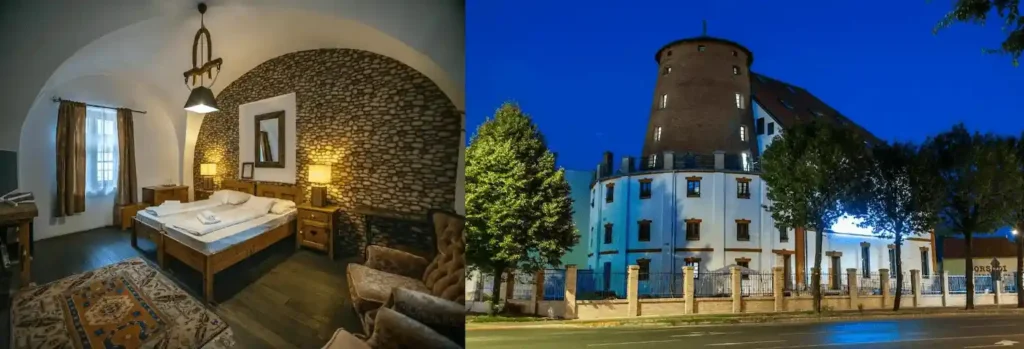
Debrecen’s historic hotel stock reflects two distinct architectural movements: the 17th-century Baroque postal infrastructure and the 19th-century industrial steam-era conversions. These are not decorative “old buildings”—they are verified institutional structures with recorded postal and industrial functions, preserving original timber frameworks, wood-beamed ceilings, and arched red-brick walls from their operational pasts.
📬 Régi Posta Hotel és Étterem ★★★
Debrecen’s oldest standing building, this 1690 Baroque landmark originally served as the postmaster’s residence during the Habsburg postal route era. The original 17th-century wood-beamed ceilings remain visible in the historic cellar and dining halls, along with arched red-brick walls that predate the building’s conversion to hotel use.
The structure’s Baroque proportions—thick masonry walls, tall arched doorways, and vaulted stone cellars—remain intact, offering a rare example of residential postal architecture from the 1600s. Modern rooms integrate into the upper floors without disrupting the building’s original envelope, maintaining exposed wooden beams and traditional whitewashed plaster. The transition from Debrecen’s main thoroughfare into the hotel’s arched brick entrance feels like stepping into a preserved chapter of Hungary’s postal heritage. No other hotel in Debrecen can claim this level of 17th-century institutional continuity.
Best for: Travelers drawn to verified postal heritage, guests seeking 17th-century Baroque residential architecture, and those prioritizing structural authenticity over modern wellness facilities.
Signature Experience: Original 17th-century wood-beamed ceilings, arched red-brick walls in historic cellar and dining halls, Baroque postmaster’s residence architecture, central location in Debrecen’s historic district.
“Dining under those 17th-century wood beams—it’s Debrecen’s oldest building still in daily use.” — Gábor, MiskolcCheck Availability & Rates →
⚙️ Malom Hotel ★★★★
Housed in a heritage-protected 19th-century steam mill, this industrial landmark preserves the original exposed brickwork and massive internal timber supports from the building’s operational era.
The structural restoration maintained the mill’s industrial proportions—high ceilings, large arched windows, and the visible wooden framework that once supported grain-processing machinery. Modern rooms integrate into the historic envelope without concealing the building’s industrial character, offering exposed brick walls and views of the preserved timber structure. The transition from Debrecen’s urban center into the hotel’s industrial-brick lobby feels like entering a preserved chapter of Hungary’s steam-era manufacturing history. No other hotel in Debrecen offers this level of verified industrial architectural continuity.
Best for: Guests drawn to industrial heritage conversions, travelers seeking 19th-century steam-era architecture, and those prioritizing structural authenticity over ornamental luxury.
Signature Experience: Original exposed 19th-century brickwork, massive internal timber supports from steam mill era, heritage-protected industrial architecture, modern rooms with exposed brick and wooden beams.
“Sleeping inside a 19th-century steam mill with the original timber supports still visible—that’s Debrecen’s industrial soul.” — Tamás, EgerCheck Availability & Rates →
Stay in Hungary’s Castle Hotels
📊 Comparison: Best Historic Hotels in Hungary
| Hotel | Location | Wellness & Spa | Dining | Unique Perks | Best For |
|---|---|---|---|---|---|
|
🎭 Anna Grand Hotel ★★★★★ |
Balatonfüred, lakefront |
Thermal spa, Habsburg wellness |
Lake-view dining, seasonal menus |
Anna Ball since 1824 Neoclassical ballroom |
Institutional continuity, spa tradition |
|
🏛️ Hotel Kristály Imperial ★★★★ |
Tata, town center |
Thermal facilities, cross-vaulted cellars |
Hungarian cuisine, historic cellar setting |
1770 Esterházy commission Baroque carriage entrance |
Baroque architecture, postal heritage |
|
🎶 Tisza Hotel ★★★ |
Szeged, Széchenyi Square |
Fitness center, city wellness access |
Traditional Hungarian, concert hall setting |
Franz Liszt performance space Post-flood eclectic architecture |
Cultural history, performance legacy |
|
🏺 Mozart Hotel ★★★★ |
Szeged, historic center |
City wellness partnerships, nearby thermal baths |
Biedermeier dining room, regional specialties |
Pre-flood Baroque survival 1700s vaulted ceilings |
Biedermeier interiors, structural authenticity |
❓ FAQ: Best Historic Hotels in Hungary
What makes a hotel “historic” in Hungary?
A hotel qualifies as historic if it occupies a verified 18th- or 19th-century structure with preserved architectural elements from its original function—Baroque postal stations, neoclassical spa institutions, or industrial steam-era conversions. In Hungary, this means original cross-vaulted cellars, grand ballrooms with institutional continuity, or timber frameworks from Habsburg-commissioned projects. Properties like Anna Grand Hotel maintain the Anna Ball tradition since 1824, while Hotel Kristály Imperial preserves the 1770 Esterházy-commissioned Baroque envelope designed by Jakab Fellner.
Which Hungarian city has the best historic hotels outside Budapest?
Balatonfüred offers the strongest combination of neoclassical spa heritage and lakefront institutional continuity, anchored by Anna Grand Hotel’s 1786 landmark status and verified Anna Ball tradition. Tata provides access to the oldest functioning hotel in Hungary—Hotel Kristály Imperial’s 1770 Baroque structure—while Szeged offers both pre-flood Baroque survivals like Mozart Hotel and post-flood eclectic landmarks like Tisza Hotel. Debrecen’s inventory includes Hungary’s oldest standing building (Régi Posta Hotel, 1690) and a rare 19th-century industrial steam mill conversion.
Do Hungary’s historic hotels include modern wellness facilities?
Yes, but the integration varies by property. Anna Grand Hotel offers thermal spa facilities rooted in 18th-century curative traditions, maintaining Habsburg-era wellness rituals within the neoclassical envelope. Hotel Kristály Imperial integrates modern thermal facilities beneath the original 1770 cross-vaulted cellars. Industrial conversions like Malom Hotel prioritize structural preservation over spa amenities, while properties like Mozart Hotel partner with nearby thermal baths rather than installing internal wellness centers. The focus remains on architectural authenticity first, modern amenities second.
Are Baroque hotels in Hungary more expensive than industrial conversions?
Pricing depends on location, brand affiliation, and restoration scope rather than architectural style. Anna Grand Hotel commands premium rates due to its five-star status, lakefront location, and institutional continuity, while Hotel Kristály Imperial offers competitive four-star pricing for verified Esterházy-commissioned Baroque architecture. Industrial conversions like Malom Hotel typically price below Baroque landmarks, but the value proposition shifts from ornamental grandeur to structural authenticity. Three-star properties like Tisza Hotel and Régi Posta Hotel deliver verified historic envelopes at accessible rates.
Which Hungarian hotel offers the oldest preserved architecture?
Régi Posta Hotel és Étterem in Debrecen occupies the city’s oldest standing building, a 1690 Baroque postmaster’s residence with original 17th-century wood-beamed ceilings and arched red-brick walls. However, Hotel Kristály Imperial in Tata represents the oldest continuously functioning hotel in Hungary, preserving the 1770 Baroque envelope commissioned by the Esterházy family. Anna Grand Hotel claims the longest institutional continuity for a single cultural event—the Anna Ball, hosted annually since 1824 in the original neoclassical ballroom.
Can you stay in a building where Franz Liszt performed?
Yes. Tisza Hotel in Szeged preserves the original concert hall where Franz Liszt performed during the hotel’s 1885 opening season following the Great Flood of 1879. The 19th-century marble columns and gold-leaf mirrors remain intact, offering overnight guests access to the same performance space. This represents one of Hungary’s few hotels with verified musician performance history integrated into the current guest experience, distinct from museums or concert halls that prohibit overnight stays.
What is the Anna Ball, and why does it matter for hotel selection?
The Anna Ball is Hungary’s oldest continuous aristocratic social event, hosted annually since 1824 at Anna Grand Hotel in Balatonfüred. The tradition represents institutional continuity unmatched by any other Hungarian hotel, linking the property directly to 200 years of recorded cultural history. Staying at Anna Grand Hotel grants access to the original neoclassical ballroom where the event occurs, offering a verifiable connection to Habsburg-era aristocratic ritual. For travelers prioritizing institutional heritage over modern amenities, this continuity justifies premium selection over structurally similar spa hotels.
Your Stay in Hungary’s Verified Architectural Heritage
Choosing the right historic hotel in Hungary depends on whether you prioritize neoclassical spa grandeur, Baroque institutional continuity, or industrial steam-era conversions. Each property in this audit offers a distinct expression of Hungary’s architectural past—Anna Grand Hotel’s 200-year Anna Ball tradition, Hotel Kristály Imperial’s Esterházy-commissioned Baroque envelope, or Debrecen’s 1690 postmaster’s residence. These are not generic “luxury” options; they are verified heritage assets with recorded histories and preserved structural elements. Availability at this level of architectural significance shifts quickly during Hungary’s thermal spa season and cultural event calendar.
Beyond Hungary’s borders, Austria’s imperial palaces and Baroque monasteries represent the next tier of Central European architectural power—explore the best historic hotels in Austria for Habsburg-commissioned conversions and Alpine spa institutions. To the north, Slovakia’s medieval fortifications and Renaissance manor houses offer a contrasting heritage experience—discover the best historic hotels in Slovakia for Carpathian castle conversions and fortified merchant residences.
For more curated itineraries and luxury-focused travel insights, visit Your Luxury Guide. For official travel information and destination updates, visit Hungary tourism-info.
Booking a stay at Hungary’s most architecturally significant hotels secures access to buildings that predate the modern nation—structures where the “Past-Life Identity” defines the entire experience, not just the lobby décor.
Your Luxury Guide — Where Exceptional Travel Begins.