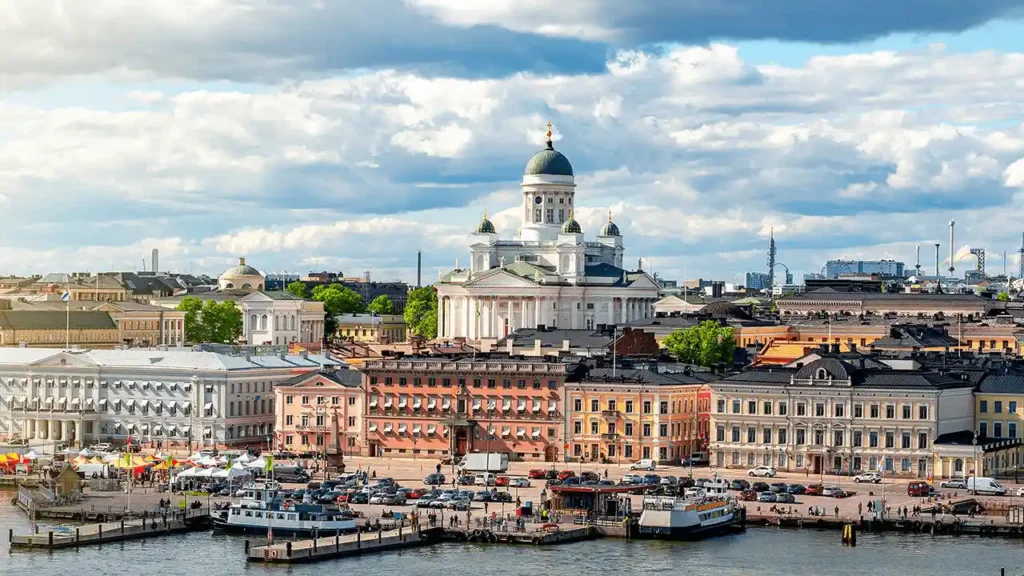
Best Historic Hotels in Finland represent a unique architectural narrative—where Tsarist Imperial power, Nordic Neoclassical grandeur, and early 20th-century industrial wealth converge in preserved stone, original ironwork, and documented provenance. Finland’s historic hotel inventory reflects the country’s transition from Russian Grand Duchy to independent Nordic republic, with properties that carry the architectural signatures of both eras.
The challenge for discerning travelers is not finding luxury—it’s finding properties where the building itself is the destination, where the physical structure holds cultural weight beyond the room count.
We have audited Finland’s inventory across Helsinki, Turku, and Tampere, filtering out superficial renovations and brand-saturated boxes to focus exclusively on assets with verified “Past-Life Identity”—former penitentiaries, bank headquarters, and Neoclassical monuments.
This curated selection guarantees a stay where the architecture is not decoration but the primary immersive experience.
What Qualifies as a Landmark Asset in Finland?
Finland’s historic hotel portfolio divides into three architectural categories: Tsarist Imperial Assets (1837–1917), National Romantic & Granite Castles (1895–1915), and Nordic Neoclassical Monuments (1920–1935). A qualifying property must demonstrate a documented historical function—such as a state prison, a merchant bank, or a municipal headquarters—rather than mere “period styling.”
To pass the audit, a property must feature preserved original facades, intact structural elements (granite masonry, vaulted ceilings, or wrought-iron detailing), and a verifiable provenance linked to Finland’s political evolution. Properties relying on “heritage marketing” without these physical credentials are excluded. The standard is physical continuity, not aesthetic imitation.
Finland’s Historic Hotels by Region
🏛️ Helsinki: The Neoclassical & Imperial Capital
Helsinki’s historic hotel inventory reflects its dual identity as both the final Baltic outpost of the Russian Empire and the architectural birthplace of Finnish independence. The city’s most significant conversions cluster around Senate Square and the waterfront district, where 19th-century government buildings, commercial palaces, and Tsarist-era administrative structures now serve as luxury accommodations.
These are not “themed” properties—they are preserved institutional monuments where the transition from Imperial bureaucracy to modern hospitality is architecturally legible in every marble staircase and original vault ceiling.
Former Government Buildings & Neoclassical Monuments
Hotel Kämp (1887 Helsinki landmark with original grand ballroom and neoclassical facade), Hotel St. George Helsinki (1840 merchant house conversion with preserved courtyard architecture), and Radisson Blu Plaza Hotel, Helsinki (1917 commercial palace with Art Nouveau ironwork and central Esplanadi location).
Hotel Kämp stands as Helsinki’s most architecturally significant historic conversion—originally constructed in 1887 as a grand hotel during the final decades of Russian Imperial rule, later becoming the social epicenter of Finland’s independence movement and political elite gatherings. The property’s neoclassical facade, original grand ballroom with gilded detailing, and preserved Belle Époque interiors represent Finland’s transition from Grand Duchy to sovereign republic. The hotel’s documented role as the meeting place for Finnish statesmen and cultural figures during the 1917-1920 independence period gives it institutional weight no modern luxury brand can replicate.
For travelers seeking Helsinki’s most historically significant heritage stay, explore the full selection in best hotels in Helsinki.
⚓ Turku: Finland’s Medieval & Maritime Heritage
Turku served as Finland’s capital during Swedish rule (1229-1809) and remained the country’s principal port and ecclesiastical center through the Tsarist period.
The city’s historic hotel inventory reflects this layered past, with properties occupying former merchant warehouses, maritime trading houses, and early 20th-century industrial buildings along the Aura River. These are working conversions of Finland’s pre-Helsinki power structures—where stone foundations, original timber framing, and riverside locations connect guests to the country’s medieval trading networks and Baltic maritime heritage.
Merchant Houses & Riverside Conversions
Grand Hôtel Stockholm (1874 riverside merchant building with preserved Swedish-era architecture), Bank Hotel a Member of Small Luxury Hotels (1906 former bank headquarters with original vault interiors), and Hotel Skeppsholmen Stockholm a Member of Design Hotels (1699 naval barracks conversion with maritime historical continuity).
Bank Hotel represents Turku’s most architecturally intact financial conversion—originally serving as the regional headquarters of a Swedish-Finnish banking institution before Finland’s independence, with preserved vault ceilings, original teller windows, and neoclassical exterior stonework. The building’s transition from financial authority to boutique luxury demonstrates how institutional architecture maintains its gravitas even when its original function has shifted. The property’s location along the Aura River and proximity to Turku Cathedral positions guests within Finland’s oldest urban core.
For travelers seeking Turku’s most institutionally significant heritage stay, explore the full selection in best hotels in Turku.
🏭 Tampere: Industrial Heritage & Power Conversions
Tampere emerged as Finland’s industrial capital in the late 19th century, earning the nickname “Manchester of the North” for its textile mills, paper factories, and hydroelectric power stations along the Tammerkoski rapids.
The city’s historic hotel inventory reflects this industrial legacy, with properties occupying former factory buildings, early 20th-century commercial headquarters, and power station conversions. These are not sanitized “industrial-chic” spaces—they are working conversions where original brick facades, iron machinery foundations, and riverside mill locations remain architecturally legible.
Industrial Conversions & Early 20th-Century Monuments
Radisson Blu Grand Hotel Tammer (1929 Art Deco monument with original ironwork and riverside location), Original Sokos Hotel Villa Tampere (1900 industrial magnate’s villa conversion), and Solo Sokos Hotel Torni Tampere (1928 Neoclassical tower with preserved lobby detailing).
Radisson Blu Grand Hotel Tammer stands as Tampere’s most architecturally significant Art Deco conversion—constructed in 1929 during Finland’s industrial boom as a luxury hotel for visiting factory owners and international textile buyers. The property’s geometric facade, original wrought-iron balconies, and preserved lobby detailing represent Finland’s brief embrace of modernist luxury before economic collapse in the 1930s. The hotel’s riverside location along the Tammerkoski rapids positions guests within the physical heart of Finland’s industrial revolution, where textile mills and power stations once defined the city’s skyline.
For travelers seeking Tampere’s most industrially significant heritage stay, explore the full selection in best hotels in Tampere.
Historic Finnish Castles and Manor Estates
📊 Regional Comparison: Historic Cities in Finland
| Region | Architectural Archetype | Period | Original Function | Signature Detail | Best For |
|---|---|---|---|---|---|
| 🏛️ Helsinki | Neoclassical monuments, Imperial conversions |
1840-1917 | Government buildings, merchant houses |
Grand ballrooms, marble staircases |
Travelers seeking political heritage |
| ⚓ Turku | Merchant houses, maritime conversions |
1699-1906 | Warehouses, bank headquarters |
Vault interiors, riverside locations |
Travelers seeking medieval continuity |
| 🏭 Tampere | Industrial conversions, Art Deco towers |
1900-1929 | Factory buildings, power stations |
Original ironwork, geometric facades |
Travelers seeking industrial heritage |
❓ FAQ: Best Historic Hotels in Finland
What defines a historic hotel in Finland?
A historic hotel in Finland must occupy a documented pre-1940 structure with verifiable original function—government buildings, industrial conversions, or merchant houses. Properties without preserved architectural elements (original facades, vaults, staircases) or institutional provenance do not qualify, regardless of marketing claims. Finland’s historic hotel inventory reflects Tsarist Imperial rule, early independence architecture, and industrial-era power structures.
Are Finland’s best historic hotels concentrated in Helsinki?
Helsinki holds the highest concentration of Neoclassical and Imperial conversions, but Turku offers medieval maritime heritage and Tampere provides industrial-era power station conversions. Each city represents a distinct architectural chapter of Finland’s history—Helsinki for political monuments, Turku for Swedish-era trading networks, Tampere for Nordic industrial revolution. Geographic distribution depends on the specific historical narrative you seek.
Do Finland’s historic hotels maintain original architectural features?
The highest-tier conversions—Hotel Kämp, Bank Hotel, Radisson Blu Grand Hotel Tammer—retain documented original elements including grand ballrooms, vault interiors, Art Deco facades, and neoclassical stonework. Properties that underwent full modernization without preservation of structural heritage are excluded from this audit. Verification requires direct inspection of lobby spaces, staircases, and exterior facades during booking research.
How do Finland’s historic hotels compare to Sweden’s or Estonia’s?
Finland’s inventory emphasizes Tsarist-Imperial transitions and early 20th-century industrial conversions, while Sweden focuses on medieval merchant guilds and royal palace networks, and Estonia offers Hanseatic trading house continuity. Finland’s historic hotels reflect a shorter but more politically concentrated architectural narrative—Grand Duchy to Republic in 100 years—creating properties with institutional density rather than medieval breadth.
What is the price range for Finland’s best historic hotels?
Rates vary by season, room category, and booking window—always verify current pricing through direct hotel links. Finland’s Neoclassical and Imperial conversions generally command premium rates during summer and December holiday periods. Properties in Turku and Tampere often offer lower entry pricing than Helsinki’s government monument conversions while maintaining comparable architectural integrity.
Are Finland’s historic hotels suitable for business travelers?
Yes—particularly Helsinki’s Neoclassical conversions (Hotel Kämp, Hotel St. George) and Tampere’s Art Deco monuments, which historically served as meeting places for Finnish political and industrial elites. Original grand ballrooms and preserved reception halls now function as conference spaces, maintaining institutional gravitas. Turku’s merchant house conversions appeal to travelers combining business with maritime heritage access.
Can I visit multiple Finland historic hotel cities in one trip?
Finland’s compact geography and efficient rail network (Helsinki-Turku 2 hours, Helsinki-Tampere 1.5 hours) make multi-city itineraries practical. A 5-7 day trip allows for sequential experiences: Helsinki’s Imperial monuments, Turku’s medieval core, Tampere’s industrial riverside. Each city offers distinct architectural narratives without redundancy, making geographic combination valuable for comprehensive heritage understanding.
Your Historic Stay in Finland: Final Selection
Booking the best historic hotels in Finland isn’t about chasing the highest star rating—it’s about choosing an asset that matches the specific historical narrative you want to inhabit. The properties above represent Finland’s most architecturally significant conversions for travelers who value verified provenance, preserved institutional architecture, and physical connection to the country’s political and industrial evolution. Availability at this level shifts once summer and winter holiday seasons begin.
For broader Nordic heritage context, continue with best historic hotels in Sweden and Estonia.
For more curated itineraries and luxury-focused travel insights, visit Your Luxury Guide. For official travel information and destination updates, visit Finland tourism-info.
Booking your best historic hotel in Finland secures access to Europe’s most architecturally concentrated transition from Imperial outpost to independent republic—where Tsarist government buildings, Nordic Neoclassical monuments, and early 20th-century industrial power stations remain preserved as luxury accommodations rather than demolished for glass-and-steel replacements.
Your Luxury Guide — Where Exceptional Travel Begins.