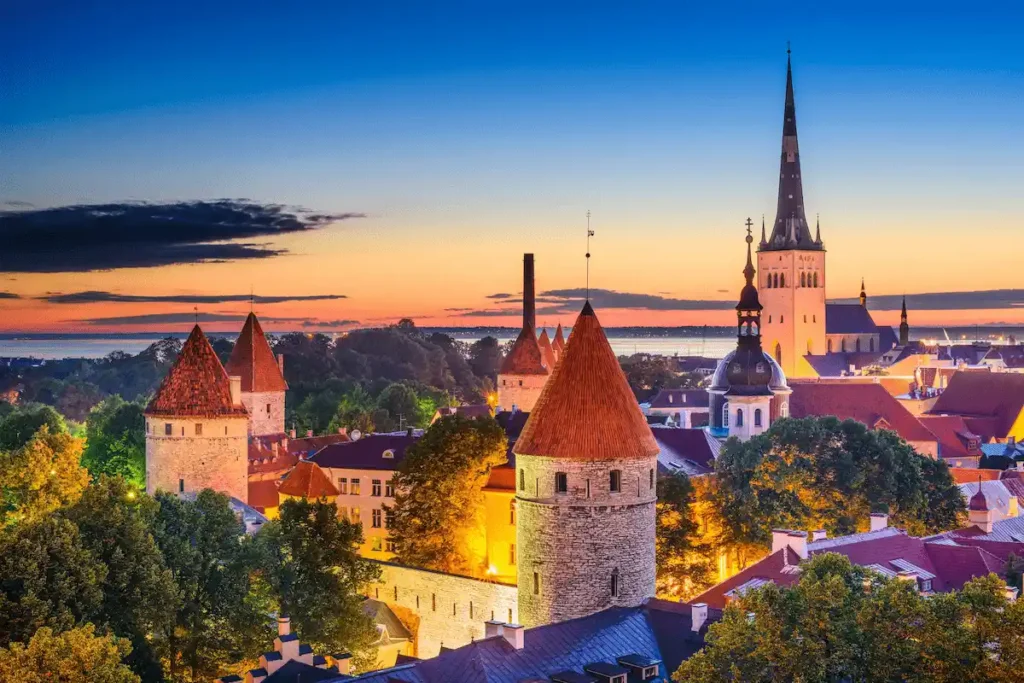
Finding the best historic hotels in Estonia requires filtering beyond price tags and star ratings to focus on buildings with documented pasts and preserved architectural souls. The country’s inventory is small but distinctive—most properties are concentrated in the capital, university towns and spa resorts.
This audit eliminates modern renovations that erase original character and focuses exclusively on assets with verified 18th- to early 20th-century heritage: Art Nouveau villas, Classicist credit association buildings, and Renaissance merchant houses where original floorings, tile stoves, and ceiling garlands remain intact. These are not recreations—they are living chapters of Estonia’s merchant and noble past, preserved through decades of Soviet repurposing and restored to luxury standards without sacrificing their physical testimony.
This selection saves you from generic Baltic boutique hotels and guarantees a stay where the building itself is the destination.
Tallinn’s Historic Landmarks: The Capital’s Crown Jewels
Estonia’s capital holds the country’s most concentrated collection of medieval and Hanseatic heritage. The Old Town’s limestone walls and merchant guild houses create an unmatched setting for travelers seeking UNESCO-listed architecture combined with modern luxury.
These properties represent the highest tier of Baltic preservation—where 14th-century Gothic vaults meet contemporary spa facilities and Michelin-level dining. They appeal to travelers who want immediate access to Tallinn’s cobblestone streets while staying in buildings that defined the city’s mercantile power during the medieval period.
The Essential Three: Tallinn’s Top Historic Hotels
For the full architectural audit of Tallinn’s most significant conversions—including The Three Sisters Hotel (a 1362 merchant guild complex), Nunne Boutique Hotel (a 13th-century Cistercian convent), and Merchants House Hotel (a 1400s trading house with limestone cellars).
Explore the complete audit of the the best historic (verified and preserved) hotels in Tallinn.
University Towns & Spa Resorts: Estonia’s Regional Heritage
Beyond the capital, Estonia’s historic hotel inventory is defined by two distinct categories: intellectual centers and seaside wellness destinations.
Tartu holds the country’s finest Classicist and Art Nouveau conversions—buildings tied to university life and Baltic German merchant culture.
Pärnu and Viljandi, meanwhile, preserve rare early 20th-century spa and summer resort architecture, including properties that served as presidential clubhouses and wartime hospitals. These assets appeal to travelers who prefer quieter settings, authentic period interiors, and direct access to Estonia’s literary and spa traditions without the tourist density of Old Town Tallinn.
🏛️ Antonius Boutique Hotel ★★★★
Antonius occupies the 1811 Classicist landmark that originally housed the Livonian Noblemen’s Credit Association—a rare surviving financial institution building directly facing Tartu University. The property retains its 18th-century cross-vaulted cellars in their original configuration, while the top floor preserves authentic 19th-century ceiling joists, white glazed tile stoves with cornices, and door handles dating to the 1830s renovation.
The rooms blend this structural heritage with contemporary Baltic design—natural linens, restored timber floors, and minimalist furniture that respects the proportions of the original Classicist interiors. The transition from Tartu’s university district into the hotel’s stone-walled entry feels like stepping into a preserved merchant estate rather than a modern boutique property. The building’s proximity to the Town Hall Square and Tartu Art Museum makes it the most architecturally positioned stay in Estonia’s intellectual capital.
Best for: Academics and cultural travelers seeking a Classicist landmark with intact 18th-century structural elements in the heart of university Tartu.
Signature Experience: 18th-century cross-vaulted wine cellars, original 1830s tile stoves and door handles, rooftop terrace overlooking the university quarter, breakfast in period-authentic dining rooms with restored joists.
“The tile stove in our room felt like a museum piece—except we got to sleep next to it.” — Henrik, CopenhagenCheck Availability & Rates →
🌸 Villa Margaretha Boutique Hotell
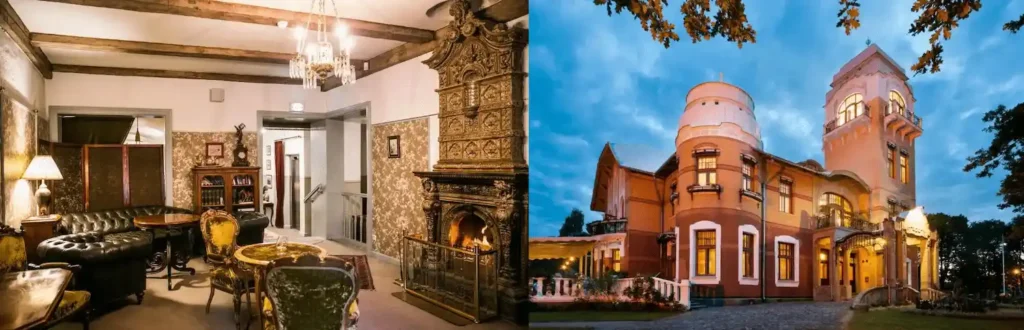
Villa Margaretha in Tartu, is an unranked 1911 Art Nouveau villa built as the private residence of Heinrich Riedel and later repurposed as a Soviet-era library and furniture store. The restoration uncovered rare 1911 floral ceiling garlands and wall paintings hidden beneath layers of oil paint—some of the finest Art Nouveau interior decoration surviving in the Baltic region.
The property retains its landmark corner tower, original period-authentic hand-printed wallpapers, and carved wooden staircases that define the villa’s pre-war merchant aesthetic. The rooms balance this ornamental heritage with contemporary comfort—plush beds, modern bathrooms, and reading nooks positioned beneath restored ceiling frescoes. The garden terrace overlooks Tartu’s residential quarter, offering a quieter alternative to the busier university district while remaining within walking distance of the Botanical Garden and Estonian National Museum. This is Estonia’s most intact Art Nouveau residential conversion.
Best for: Design-focused travelers and couples drawn to rare Art Nouveau interiors with documented restoration and original 1911 floral ceiling art.
Signature Experience: Restored 1911 ceiling garlands and wall paintings, period-authentic hand-printed wallpapers, landmark corner tower, garden terrace with residential views, proximity to Botanical Garden.
“Those ceiling flowers took my breath away—I kept waking up just to look at them.” — Liisa, StockholmCheck Availability & Rates →
🏰 Villa Ammende Restaurant and Hotel ★★★★★
Villa Ammende in Pärnu, is a 1905 Art Nouveau mansion built by a merchant family and later repurposed as a summer casino and the first Estonian President’s clubhouse. The property is recognized as one of the finest early Art Nouveau examples in Europe—it preserves original floorings, 110-year-old tile stoves, restored oak doors, the original garden fence, and a 150-year-old oak park that surrounds the villa.
The interiors maintain their Belle Époque grandeur: high ceilings with stucco moldings, period chandeliers, and hand-painted wall panels that reflect the villa’s dual identity as both a private residence and a presidential retreat.
The rooms combine this ornamental heritage with modern luxury—freestanding bathtubs, plush textiles, and balconies overlooking the historic park. The restaurant occupies the villa’s main salon, serving contemporary Estonian cuisine beneath the original ceiling frescoes. This is Pärnu’s most architecturally significant conversion and the only property in Estonia with documented presidential history.
Best for: Luxury travelers and history enthusiasts seeking a presidential Art Nouveau mansion with one of Europe’s best-preserved early 20th-century park estates.
Signature Experience: 150-year-old oak park, original 1905 tile stoves and oak doors, Belle Époque dining in the presidential salon, spa treatments in period rooms, proximity to Pärnu Beach.
“Breakfast under those ceiling frescoes felt like dining in a private palace.” — Anna, BerlinCheck Availability & Rates →
🌳 Park Hotel Viljandi ★★★★
Park Hotel Viljandi occupies a 1910 Neo-Renaissance landmark originally built as a luxury brick residence with central heating—a rare feature in early 20th-century Estonia—and later converted into a wartime hospital.
The restoration preserved the original red brick external walls and transformed the historic inner courtyard into a signature glass-roofed atrium that now serves as the hotel’s social center. Interior woodwork was replicated from an original 1910 door discovered in the basement, maintaining the property’s period authenticity while integrating modern amenities. The rooms blend this structural heritage with contemporary Scandinavian design—natural wood furniture, neutral tones, and spa-level bathrooms that respect the building’s proportions.
The location in Viljandi’s historic center offers direct access to the medieval castle ruins and Lake Viljandi, appealing to travelers who prefer Estonia’s quieter cultural destinations over coastal resorts. This is the country’s most significant Neo-Renaissance hospital conversion.
Best for: Travelers seeking a Neo-Renaissance landmark with a glass-roofed historic courtyard in Estonia’s quietest medieval town near castle ruins and lakeside trails.
Signature Experience: Glass-roofed historic courtyard atrium, restored 1910 red brick exterior, replicated period woodwork, wellness center, walking access to Viljandi Castle and lake.
“That glass atrium courtyard turned a rainy afternoon into the best part of our trip.” — Martin, OsloCheck Availability & Rates →
🕰️ St. Peterburg ★★★
St. Peterburg is one of the oldest buildings in Pärnu—a 17th-century landmark whose restaurant, Seegi Maja, was reconstructed from a medieval almshouse.
The property retains its authentic 17th-century stone and timber structure, including exposed wooden beams, vaulted ceilings, and traditional high-status period furniture. The most notable room is the Catherine Suite, which preserves a historic canopy bed and serves as a rare example of intact merchant-class sleeping quarters from the pre-industrial Baltic era. The interiors maintain their atmospheric, low-lit character—thick stone walls, narrow staircases, and small-paned windows that reflect the building’s almshouse origins.
The hotel’s proximity to Pärnu’s Old Town and the beach makes it a practical base for travelers who prioritize location and historical authenticity over modern spa amenities. This is Estonia’s oldest continuously operating hospitality building.
Best for: History purists and budget-conscious travelers drawn to 17th-century stone and timber architecture with medieval almshouse origins in central Pärnu.
Signature Experience: Catherine Suite with historic canopy bed, exposed 17th-century wooden beams, medieval stone structure, Seegi Maja restaurant in former almshouse, walking distance to beach and Old Town.
“Sleeping in that canopy bed felt like stepping into a Hanseatic merchant’s diary.” — Jonas, VilniusCheck Availability & Rates →
Castle Hotels in Estonia – Baltic Manor Estates
📊 Comparison: Best Historic Hotels in Estonia
| Hotel | Location | Wellness & Spa | Dining | Unique Perks | Best For |
|---|---|---|---|---|---|
|
Antonius Boutique Hotel ★★★★ |
Tartu, University Quarter |
Limited wellness, no spa |
Period dining rooms, breakfast included |
1811 Classicist landmark, 18th-century cellars |
Cultural travelers, academics |
|
🌸 Villa Margaretha Hotell No rating |
Tartu, Residential Quarter |
No spa, garden terrace |
Breakfast, café service |
1911 ceiling garlands, Art Nouveau interiors |
Design lovers, couples |
|
🏰 Villa Ammende Hotel ★★★★★ |
Pärnu, Historic Park |
Spa treatments, park wellness |
Belle Époque salon, Estonian cuisine |
Presidential clubhouse, 150-year-old oak park |
Luxury seekers, history enthusiasts |
❓ FAQ: Best Historic Hotels in Estonia
What makes a hotel “historic” in Estonia?
A historic hotel in Estonia preserves documented architectural elements from the 18th to early 20th century—original tile stoves, cross-vaulted cellars, Art Nouveau ceiling garlands, or Classicist facades tied to merchant, noble, or institutional pasts. Properties like Antonius Boutique Hotel retain 1811 joists and door handles, while Villa Margaretha preserves rare 1911 floral frescoes uncovered during restoration.
Are historic hotels in Estonia more expensive than modern luxury hotels?
Not necessarily. Properties like St. Peterburg offer 17th-century stone and timber architecture at three-star rates, while Villa Ammende commands five-star pricing for its presidential heritage and 150-year-old park. Historic hotels prioritize authenticity over modern amenities, which can lower costs compared to glass-and-steel spa resorts along the Baltic coast.
Which Estonian city has the best historic hotels outside Tallinn?
Tartu holds the country’s finest Classicist and Art Nouveau conversions, including Antonius Boutique Hotel (1811 credit association) and Villa Margaretha (1911 merchant villa). Pärnu offers Belle Époque spa heritage at Villa Ammende, while Viljandi preserves the only Neo-Renaissance hospital conversion at Park Hotel Viljandi.
Do historic hotels in Estonia include modern spa facilities?
Some do, some don’t. Villa Ammende offers spa treatments in period rooms with its 150-year-old park setting. Park Hotel Viljandi includes a wellness center in its glass-roofed courtyard. Antonius and Villa Margaretha focus on architectural preservation over wellness amenities, appealing to travelers prioritizing structural authenticity.
Can I stay in a former presidential building in Estonia?
Yes. Villa Ammende served as the first Estonian President’s summer clubhouse and preserves its Belle Époque interiors, including original tile stoves, oak doors, and ceiling frescoes. It’s the only property in Estonia with documented presidential use and one of the finest Art Nouveau estates in Europe.
Are Estonia’s historic hotels suitable for families?
Most historic hotels in Estonia cater to couples and solo travelers due to their boutique scale and period room configurations. Larger properties like Park Hotel Viljandi and Villa Ammende can accommodate families, but the focus remains on architectural heritage rather than family-specific amenities like playgrounds or kids’ clubs.
What’s the most authentic medieval hotel experience in Estonia?
St. Peterburg offers the oldest continuously operating hospitality building in Pärnu, with 17th-century stone and timber structure, exposed beams, and the Catherine Suite’s historic canopy bed. For medieval Hanseatic heritage, Tallinn’s Old Town holds 13th- to 15th-century conversions like Nunne Boutique Hotel and The Three Sisters Hotel.
Final Verdict: Estonia’s Finest Historic Hotels
Choosing a historic hotel in Estonia means prioritizing architectural authenticity over generic luxury amenities. The properties above represent the most consistently preserved conversions across university towns, spa resorts, and regional heritage centers—from Classicist credit associations to Art Nouveau presidential villas and medieval almshouses. Availability at this level is limited, particularly during summer festival season and university events.
For broader context on Baltic heritage, compare best historic hotels in Latvia and historic hotels in Finland to see how Estonia’s Art Nouveau inventory contrasts with Riga’s guild houses and Helsinki’s functionalist landmarks.
For more curated itineraries and luxury-focused travel insights, visit Your Luxury Guide. For official travel information and destination updates, visit Estonia tourism-info.
Booking a historic hotel in Estonia guarantees a stay where the building’s past—whether as a merchant villa, presidential clubhouse, or wartime hospital—remains the defining experience, not an afterthought.
Your Luxury Guide — Where Exceptional Travel Begins.