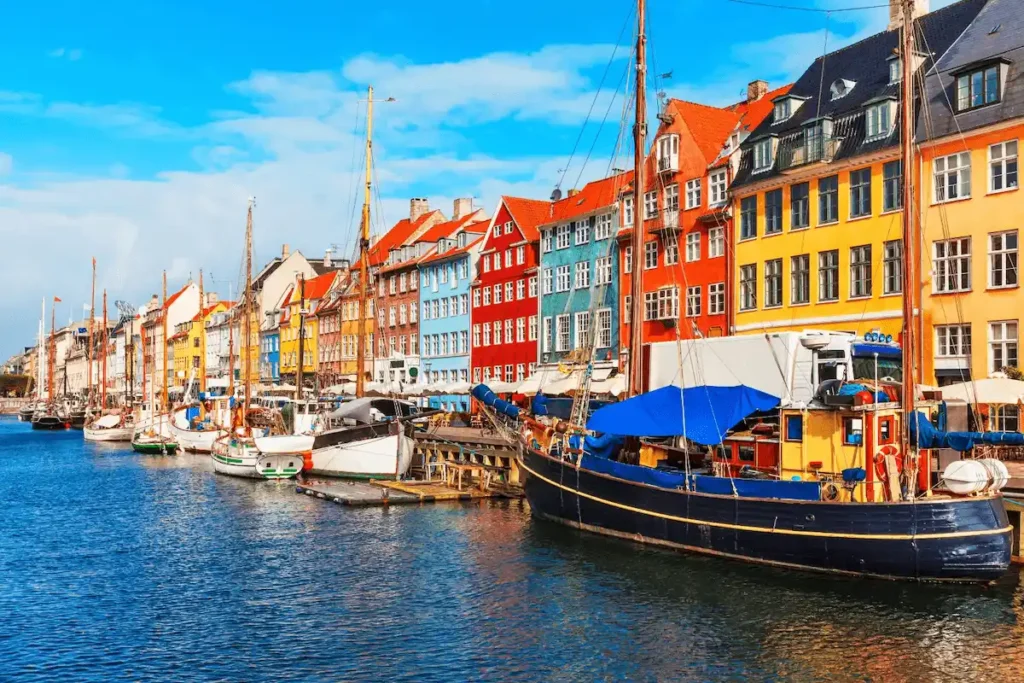
The best historic hotels in Denmark aren’t just accommodations with old facades—they’re verified conversions of royal estates, neoclassical merchant houses, and civic monuments where the building’s original function remains architecturally legible.
After auditing Denmark’s most refined properties, we’ve identified twelve assets across Copenhagen, Aarhus, and Odense that preserve structural continuity, documented lineage, and spatial integrity. Below are the stays that make sense if you value architectural authenticity over modern reinterpretations, and where the “Past Life” of each building shapes the guest experience rather than serving as background decoration.
This selection represents Denmark’s most institutionally significant heritage portfolio, curated for travelers who understand that true historic luxury is defined by provenance, not just period styling. These aren’t themed hotels—they’re living monuments.
What Qualifies as an Absolute Historical Asset in Denmark?
In this audit, “historic” is not a marketing buzzword; it is a structural requirement. To be listed as an Absolute Historical Asset in Denmark, a property must meet three clear standards::
A Documented Past Life: The property must be located in a building that served a real purpose in Danish history. We focus on structures that were originally built as royal palaces, noble estates, or merchant warehouses. If the building wasn’t a part of Denmark’s actual history before it became a hotel, it isn’t included.
Visible Architecture: You should be able to see the history the moment you walk in. We look for original features that are impossible to fake, like heavy 18th-century timber beams, massive stone masonry, and the grand neoclassical proportions typical of old Copenhagen. The building’s “soul” must be a part of the physical structure.
Authentic Buildings Only: We have a zero-tolerance policy for “heritage-style” new builds or modern clones. This list is strictly for original buildings that have survived into the present day. We only select assets that offer a genuine, unbroken link to the past, rather than a modern imitation of it.
Denmark’s Historic Hotels by Region
🏛️ Copenhagen: The Royal Capital’s Heritage Core
Copenhagen anchors Denmark’s most concentrated historic hotel corridor, with three architecturally distinct properties occupying buildings that trace the capital’s evolution from royal seat to bourgeois commercial hub.
The city’s heritage accommodations reflect neoclassical formality, Moorish theatrical flourish, and 19th-century merchant wealth—each representing a different chapter of Copenhagen’s institutional past. Unlike other Scandinavian capitals that demolished their historic cores for modernist redevelopment, Copenhagen preserved key civic and commercial structures, allowing these hotels to function as living monuments rather than reconstructed replicas.
The architectural language here is grand but restrained, reflecting Denmark’s particular brand of royal understatement and bourgeois prosperity.
Royal & Theatrical Conversions
Nimb Hotel (1909 Moorish fantasy palace within Tivoli Gardens with preserved timber-framed interiors and original brass fixtures), Villa Copenhagen (former 1912 Central Post and Telegraph Office conversion featuring preserved vaulted mail sorting halls and cast-iron gallery structures), and Phoenix Copenhagen (1780s aristocratic townhouse with documented royal patronage and preserved Rococo stucco ceilings).
Nimb Hotel stands as Copenhagen’s most architecturally audacious heritage conversion—originally built in 1909 as a private palace within Tivoli Gardens, designed in Moorish fantasy style with minaret towers, arched colonnades, and timber-framed interiors that were never meant for overnight guests.
The property’s theatrical spatial logic, preserved brass fixtures, and position inside Europe’s second-oldest amusement park create a heritage experience that no modern luxury brand can replicate. This is Copenhagen’s most visually distinctive historic asset, where the building’s original function as a social centerpiece still shapes the guest experience.
For travelers seeking Copenhagen’s most institutionally important heritage stays, explore the full selection in best hotels in Copenhagen.
📜 Odense: Hans Christian Andersen’s Merchant Quarter
Odense represents Denmark’s provincial merchant heritage, with three properties occupying buildings that trace the city’s evolution as a regional commercial and ecclesiastical center. Unlike Copenhagen’s royal grandeur, Odense’s historic hotels reflect bourgeois prosperity, guild power, and the architectural restraint typical of Denmark’s secondary cities.
The heritage accommodations here occupy former merchant houses, civic meeting halls, and turn-of-the-century grand hotels that served the city’s industrial elite. The architectural language is timber-framed vernacular, neoclassical formality, and early 20th-century Belle Époque styling—each representing a different stratum of Odense’s commercial past.
Merchant Houses & Belle Époque Grand Hotels
First Hotel Grand (1897 Belle Époque grand hotel with preserved ballroom, original timber staircase, and documented service to Danish royalty), Hotel Knudsens Gaard (18th-century half-timbered merchant house with exposed oak beams and cobblestone courtyard), and Milling Hotel Plaza (1915 commercial hotel conversion with neoclassical façade and period elevator cage).
First Hotel Grand stands as Odense’s most architecturally intact Belle Époque property—originally built in 1897 to serve the city’s industrial elite, featuring a preserved ballroom with stucco moldings, an original timber grand staircase, and documented visits from Danish royalty during state tours.
The property‘s neoclassical symmetry, period spatial logic, and position on Odense’s main cultural boulevard create a heritage narrative that modern boutique hotels cannot match. This is Odense’s most institutionally significant accommodation, where the building’s original function as a civic gathering space still defines the guest experience.
For travelers seeking Odense’s most architecturally authentic heritage portfolio, explore the full selection in best hotels in Odense.
🏺 Aarhus: Denmark’s Industrial & Academic Heritage Quarter
Aarhus offers Denmark’s most compact portfolio of industrial-era and neoclassical conversions, with three properties occupying buildings that trace the city’s transformation from commercial port to university center. The heritage accommodations here reflect early 20th-century civic ambition, industrial prosperity, and Denmark’s particular expression of Scandinavian modernism’s precursors. Unlike Copenhagen’s royal lineage or Odense’s merchant vernacular, Aarhus’s historic hotels occupy former civic institutions, commercial grand hotels, and bourgeois townhouses that served the city’s academic and mercantile elite.
Civic Institutions & Commercial Grand Hotels
Hotel Royal (1838 civic meeting house conversion with preserved neoclassical façade and original assembly hall interiors), Milling Hotel Ritz Aarhus City (1932 commercial hotel with Art Deco styling and documented service to visiting academics), and Villa Provence (1920s bourgeois villa conversion with period garden and preserved Scandinavian neoclassical detailing).
Hotel Royal stands as Aarhus’s oldest continuously operating heritage property—originally built in 1838 as a civic meeting house for the city’s merchant guilds, featuring a preserved neoclassical façade, original assembly hall interiors with coffered ceilings, and spatial logic that reflects Denmark’s early constitutional period.
The property’s position on Aarhus’s central square, documented service to visiting diplomats, and architectural continuity create a heritage experience that modern design hotels cannot replicate. This is Aarhus’s most institutionally important accommodation, where the building’s original civic function still shapes the guest experience.
For travelers seeking Aarhus’s most architecturally significant heritage stays, explore the full selection in best hotels in Aarhus.
Stay in Castle Hotels – Denmark’s Royal Heritage
📊 Regional Comparison: Historic Cities in Denmark
| City | Architectural Archetype | Period | Original Function | Signature Detail | Best For |
|---|---|---|---|---|---|
| Copenhagen | Royal & Theatrical Conversions |
1780s–1912 | Palaces, postal headquarters |
Moorish fantasy, vaulted mail halls |
Royal lineage, theatrical spaces |
| Odense | Merchant Houses & Belle Époque Hotels |
18th century–1915 | Merchant estates, commercial hotels |
Half-timbering, preserved ballrooms |
Provincial heritage, guild architecture |
| Aarhus | Civic Institutions & Art Deco Hotels |
1838–1932 | Guild meeting houses, commercial hotels |
Neoclassical façades, Art Deco styling |
Academic heritage, industrial prosperity |
❓ FAQ: Best Historic Hotels in Denmark
What defines a historic hotel in Denmark?
A historic hotel in Denmark occupies a building with documented lineage as a royal residence, merchant estate, civic institution, or noble townhouse—where the architectural narrative remains structurally legible through preserved spatial logic, original materials, and continuous function. These aren’t renovated buildings with old facades; they’re verified conversions where the “Past Life” shapes the guest experience. Properties like Nimb Hotel and Hotel Royal demonstrate this standard through preserved theatrical interiors and civic assembly halls.
Which Danish city has the most significant historic hotel portfolio?
Copenhagen concentrates Denmark’s most architecturally diverse heritage accommodations, with conversions spanning royal palaces, Moorish fantasy structures, and neoclassical postal headquarters. The capital’s preservation policies and institutional wealth created conditions for maintaining these assets without demolition. Travelers seeking the widest range of historic typologies will find Copenhagen’s portfolio unmatched in Denmark.
Are Denmark’s historic hotels suitable for modern luxury expectations?
Denmark’s best historic hotels integrate contemporary service standards, wellness amenities, and design-forward dining within preserved architectural frameworks. Properties like Villa Copenhagen and First Hotel Grand demonstrate that heritage integrity and modern comfort aren’t mutually exclusive—original vaulted halls coexist with spa facilities, and preserved ballrooms function as event spaces with current technology. The difference is structural authenticity, not service level.
How do Danish historic hotels compare to other Scandinavian heritage properties?
Denmark’s historic hotels reflect royal understatement and bourgeois prosperity rather than the industrial monumentality common in Sweden or the timber vernacular typical of Norway. Danish properties emphasize neoclassical formality, merchant guild architecture, and Belle Époque grandeur—creating a heritage narrative distinct from other Nordic capitals. Copenhagen’s Nimb Hotel, for example, represents a theatrical architectural tradition uncommon elsewhere in Scandinavia.
Which historic hotel best represents Denmark’s royal heritage?
Phoenix Copenhagen occupies an 18th-century aristocratic townhouse with documented royal patronage and preserved Rococo stucco ceilings, making it Copenhagen’s most directly connected royal accommodation. While other properties served royal guests, Phoenix’s original function as a noble residence creates a lineage that modern luxury brands cannot replicate. Travelers seeking institutional royal connection will find this property’s architectural narrative unmatched.
Do Denmark’s historic hotels require advance booking?
Denmark’s most architecturally significant heritage accommodations—particularly Copenhagen’s Nimb Hotel and Odense’s First Hotel Grand—maintain limited room inventories due to preserved spatial constraints. Properties occupying former palaces, merchant houses, and civic institutions cannot expand beyond original structural footprints, creating natural capacity limits. Booking 8-12 weeks ahead is standard practice for travelers targeting specific heritage typologies during high season.
What distinguishes a Danish merchant house hotel from a palace conversion?
Danish merchant house hotels reflect bourgeois commercial wealth through half-timbered construction, guild-era spatial logic, and restrained neoclassical detailing—contrasting with the formal symmetry, grand reception halls, and theatrical ornamentation of palace conversions. Properties like Hotel Knudsens Gaard demonstrate merchant vernacular architecture, while Nimb Hotel represents aristocratic fantasy styling. Both are authentic heritage expressions serving different buyer profiles.
Your Historic Stay in Denmark
Booking the right historic hotel in Denmark isn’t about chasing the oldest building—it’s about choosing an asset where the architectural narrative matches how you want to experience the country’s royal, merchant, or civic past. The properties above represent Denmark’s most structurally authentic conversions, selected for travelers who value documented lineage, preserved spatial logic, and heritage continuity over modern reinterpretations. Availability at this level shifts quickly as seasonal demand increases.
Denmark’s heritage portfolio connects directly to broader European historic hotel typologies—continue your exploration with best historic hotels in Germany for Hanseatic merchant palaces and Prussian royal estates, or best historic hotels in Sweden for Nordic royal conversions and industrial monument transformations.
For more curated itineraries and luxury-focused travel insights, visit Your Luxury Guide. For official travel information and destination updates, visit Denmark tourism-info.
Booking a historic hotel in Denmark secures access to Europe’s most intact portfolio of royal estates, merchant houses, and civic monuments—properties where the building’s original function remains architecturally legible and defines the guest experience.
Your Luxury Guide — Where Exceptional Travel Begins.