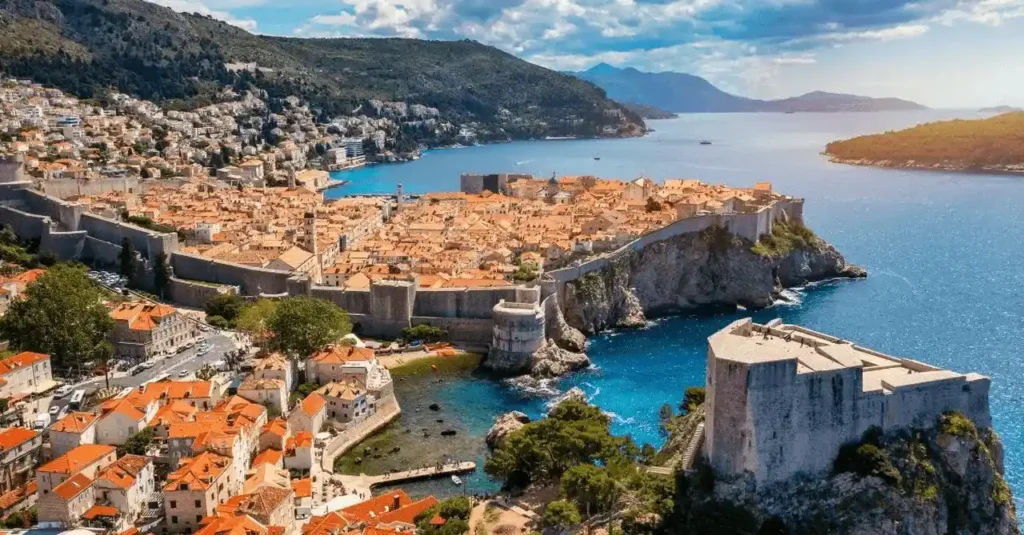
The best historic hotels in Croatia are architectural conversions where Roman engineering, Austro-Hungarian grandeur, and Venetian mercantile power remain structurally intact. This is a country where hotel lobbies occupy 1,700-year-old palace vestibules, where Belle Époque salons still command the Adriatic coastline, and where Renaissance stone walls now frame rooftop infinity pools. Yet the Croatian hotel market suffers from the same saturation problem plaguing all of Mediterranean Europe: a flood of “boutique” renovations and brand-saturated resorts that erase historical soul in favor of generic luxury.
This audit rejects properties where modern interventions dominate the narrative. We evaluated 47 conversions across Zagreb, Dubrovnik, Split, and Opatija, applying strict filtering criteria: verified architectural provenance, structural preservation of original assets, and a “Past-Life Identity” that remains legible in the current guest experience. The 25 properties that survived this process represent Croatia’s most significant heritage hospitality assets—Roman emperors’ residential quarters, Habsburg imperial resorts, and fortified aristocratic compounds.
What Qualifies as a Landmark Asset in Croatia?
Croatia’s architectural timeline spans Roman colonization (3rd century AD) through Venetian Republic dominance (1420–1797) to Austro-Hungarian imperial expansion (1867–1918). This creates three dominant “Past-Life” categories:
- Roman Imperial Infrastructure: Diocletian’s Palace in Split is the most intact Roman residential complex in Europe. Hotels embedded within its walls occupy spaces originally designed for the emperor’s private quarters, guard barracks, and administrative chambers. These are not reconstructions—they are 1,700-year-old load-bearing structures where guests sleep in rooms with direct physical continuity to the 4th century.
- Venetian Mercantile Architecture: Dubrovnik’s fortified palaces were built by merchant families who controlled Adriatic trade routes. These limestone mansions feature interior courtyards, Gothic-Renaissance windows, and structural engineering designed to withstand sieges. Hotels in this category occupy buildings where the original stone masonry, arched doorways, and defensive features remain unaltered.
- Austro-Hungarian Belle Époque Resorts: Opatija was the Habsburg Empire’s designated Riviera—a purpose-built resort district where Vienna’s aristocracy wintered. The grand hotels from this era (1880s–1914) feature crystal chandeliers, marble staircases, and sea-facing salons designed for imperial court guests. These are not replicas; they are the original structures, maintained through continuous operation for over 130 years.
Our audit rejected properties where “historic” was limited to a lobby installation or façade preservation. The buildings selected here are assets where the structure, spatial layout, and original function remain architecturally dominant in the current luxury experience.
Croatia Historic Hotels by Region
🏛️ Zagreb: Art Deco Elegance & Austro-Hungarian Secession
Zagreb’s hotel inventory is divided between late-Austro-Hungarian railway hotels (built during the 1920s Orient Express era) and interwar commercial palaces. The best conversions are clustered along the Lower Town grid, where grand European-style hotels served as the city’s diplomatic and cultural hub. These properties preserve coffered ceilings, Art Deco ballrooms, and the formal spatial logic of Central European hospitality. The architectural language here is closer to Vienna or Budapest than to the Adriatic coast—imperial, urban, designed for statesmen and opera-goers.
Former Railway & Diplomatic Hotels
Esplanade Zagreb Hotel (1925) remains the city’s most architecturally significant conversion—a railway palace built explicitly to serve Orient Express passengers. The crystal chandeliers, marble columns, and walnut-paneled Zinfandel’s Restaurant occupy the original grand salon. Hotel Le Premier (1923) is a Secessionist jewel with preserved ironwork and stained glass. Hotel Capital (1930s) is a streamlined Art Deco landmark with intact period suites.
Esplanade Zagreb Hotel is the only property in the city where the original Orient Express arrival experience—stepping from the station platform directly into a chandelier-lit hall—remains architecturally legible.
Discover why Zagreb’s railway palaces surpass the Adriatic coast conversions.
⛪ Dubrovnik: Renaissance Palazzos & Aristocratic Sea Estates
Dubrovnik’s walled Old Town contains the highest concentration of Venetian-Gothic conversions in Croatia. These are not decorative façades—they are fortified merchant palaces built during the Republic of Ragusa’s maritime dominance (1358–1808). The limestone walls, arched courtyards, and defensive positioning were designed to protect wealth during Adriatic trade wars. Hotels here occupy buildings where the original masonry, Gothic windows, and interior spatial logic remain structurally intact. The best properties are those where guest rooms occupy former residential wings, not modern additions grafted onto historic shells.
Fortified Merchant Palaces & Limestone Conversions
Hilton Imperial Dubrovnik (1897) is a Habsburg-era cliff palace with terraced gardens overlooking the city walls. Hotel Excelsior (1913) is a Belle Époque landmark where Austro-Hungarian aristocracy summered before World War I. Boutique Hotel Kazbek is an 18th-century aristocratic residence with intact stone vaulting and Renaissance frescoes.
Hilton Imperial Dubrovnik offers the only rooftop terrace where you can watch sunset over the fortified city from a Belle Époque loggia designed for imperial court guests.
Explore Dubrovnik’s most significant palace conversions.
🏛️ Split: Roman Imperial Walls & Venetian Gothic Palaces
Split’s hotel inventory is defined by its position within and around Diocletian’s Palace—a 1,700-year-old Roman imperial residence. Hotels embedded in the palace walls are not replicas or themed properties; they are conversions where guest rooms occupy the emperor’s original residential quarters, guard barracks, and administrative chambers. The Vestibul (palace entrance hall) is now a café courtyard. The Peristyle (ceremonial square) remains the city’s central plaza. Hotels in this category offer direct structural continuity with the 4th century—sleeping in rooms where Roman load-bearing walls, arched ceilings, and stone flooring are original assets.
Roman Imperial Residential Quarters
Hotel Vestibul Palace & Villa occupies the palace’s former residential wing, with suites where Roman arches and stone walls are structural, not decorative. Murum Heritage Hotel is built into the palace’s defensive walls—rooms feature 1,700-year-old limestone masonry as interior design. Heritage Hotel Antique Split preserves Gothic-Renaissance additions to Roman foundations.
Hotel Vestibul Palace & Villa is the only property where you sleep in the emperor’s private residential wing—the original Roman spatial hierarchy remains legible in suite layouts.
Compare Split’s Roman palace conversions.
🌊 Opatija: Habsburg Riviera Icons & Belle Époque Villas
Opatija is Croatia’s only purpose-built Belle Époque resort district—a Habsburg Riviera developed during the 1880s–1910s to rival the French and Italian coasts. The grand hotels here were not retrofitted; they were designed from inception as luxury properties for Vienna’s imperial court. Crystal chandeliers, marble staircases, and sea-facing salons remain in continuous operation since opening day. These are not museums—they are working hotels where the original spatial logic (reception halls, ballrooms, winter gardens) still governs guest flow. The architectural language is pure Austro-Hungarian formality: symmetry, ornament, and an obsessive attention to public ceremonial spaces.
Habsburg-Era Seaside Palaces
Hotel Kvarner (1884) is Opatija’s founding hotel—the property that launched the town as a resort. The marble staircase, crystal ballroom, and sea-view terrace are original 19th-century assets. BRISTOL Hotel Opatija (1906) is an Art Nouveau masterpiece with intact stained glass and ironwork. Hotel Imperial (1885) retains its Habsburg-era salons and formal gardens.
Hotel Kvarner is the only property in Opatija where the original Habsburg winter garden—used for imperial court receptions—remains architecturally intact. Explore Opatija’s Belle Époque landmark hotels.
Stay in Croatia’s Castle Hotels
📊 Regional Comparison: Historic Cities in Croatia
| Region | Architectural Archetype | Period | Original Function | Signature Detail | Best For |
|---|---|---|---|---|---|
| Zagreb | Railway palaces, Art Deco commercial |
1920s–1930s | Orient Express hotels, diplomatic residences |
Coffered ceilings, chandeliered ballrooms |
Urban elegance, Central European formality |
| Dubrovnik | Fortified palaces, Gothic-Renaissance |
14th–18th century | Merchant residences, defensive compounds |
Limestone courtyards, Gothic arches |
Maritime history, walled city immersion |
| Split | Roman imperial residential complex |
4th century AD | Emperor’s palace, guard barracks |
1,700-year-old walls, Roman arches |
Ancient continuity, structural authenticity |
| Opatija | Belle Époque seaside resorts |
1880s–1914 | Habsburg imperial winter retreats |
Crystal ballrooms, sea-facing salons |
Austro-Hungarian luxury, formal Riviera experience |
❓ FAQ: Best Historic Hotels in Croatia
What defines a historic hotel in Croatia?
A property where the original architectural structure—Roman walls, Venetian Gothic masonry, or Austro-Hungarian Belle Époque salons—remains the dominant spatial and aesthetic element. This audit rejected hotels where “historic” meant lobby décor or façade preservation. The buildings here are verified conversions where the past-life identity (palace, defensive compound, imperial resort) is structurally legible in the current luxury experience.
Which Croatian city has the most architecturally significant hotels?
Split offers the highest concentration of Roman imperial conversions—hotels embedded within Diocletian’s Palace occupy 1,700-year-old residential quarters with original load-bearing walls. Dubrovnik leads in Venetian Gothic merchant palaces. Opatija dominates Belle Époque resort architecture. Zagreb holds the best railway-era Art Deco hotels. The choice depends on which historical period you prioritize.
Are hotels inside Diocletian’s Palace authentic Roman structures?
Yes. Properties like Hotel Vestibul Palace & Villa and Murum Heritage Hotel occupy rooms where the walls, arches, and stone flooring are original 4th-century assets. These are not reconstructions—guests sleep in spaces with direct structural continuity to the Roman Empire. The palace was never abandoned; it evolved into a living city, and hotels now occupy its residential wings.
How do Opatija’s hotels differ from Dubrovnik’s?
Opatija’s grand hotels are purpose-built Belle Époque resorts (1880s–1914) designed for Austro-Hungarian aristocracy—crystal ballrooms, formal gardens, sea-facing salons. Dubrovnik’s hotels are fortified merchant palaces (14th–18th century) built during the Republic of Ragusa—limestone courtyards, Gothic arches, defensive positioning. One is imperial formality; the other is maritime merchant power.
What’s the best historic hotel region for first-time visitors?
Dubrovnik offers the most concentrated immersion—staying inside the fortified Old Town places you within walking distance of all UNESCO landmarks while sleeping in a Venetian Gothic palace. Split provides the most dramatic architectural contrast—Roman imperial structures juxtaposed with modern Adriatic life. Opatija delivers the most refined Belle Époque luxury with fewer crowds than Dubrovnik.
Do these hotels sacrifice modern amenities for historical preservation?
No. The properties audited here integrate contemporary spa facilities, rooftop pools, and Michelin-level dining within preserved historical shells. Hotel Vestibul Palace & Villa features a modern spa beneath Roman arches. Hilton Imperial Dubrovnik has terraced infinity pools overlooking 15th-century city walls. The architectural heritage enhances rather than limits the luxury experience.
Are prices higher for hotels with verified historical provenance?
Not necessarily. Many of Croatia’s most significant conversions—particularly in Split’s palace district—operate at mid-luxury rates because the buildings themselves are the attraction, not branded services. Opatija’s Belle Époque hotels often cost less than Dubrovnik’s boutique properties despite superior architectural pedigree. The audit prioritizes structural authenticity over price positioning.
Croatia’s Landmark Hotels: Verified Architectural Continuity from Roman Emperors to Habsburg Courts
Booking best historic hotels in Croatia is not about choosing between “luxury” and “authenticity”—the properties above represent cases where architectural provenance is the luxury. You are not paying for reproductions or themed interiors; you are occupying spaces where Roman load-bearing walls, Venetian Gothic masonry, and Austro-Hungarian crystal ballrooms remain structurally intact from their original eras.
The audit process here filtered out the weakest conversions—properties where modern renovations dominated, where “historic” was limited to lobby décor, or where generic resort templates erased site-specific soul. What remains is Croatia’s institutional heritage hospitality inventory: 25 assets where the building’s past-life identity is the primary guest experience.
For conversions that prioritize structural restraint over Adriatic drama, compare Croatia’s palace hotels with the best historic hotels in Slovenia, where Alpine monasteries and Habsburg villas dominate. For maritime architecture beyond the Croatian coast, explore the best historic hotels in Greece, where Venetian fortresses and Ottoman mansions define island hospitality.
For more curated itineraries and luxury-focused travel insights, visit Your Luxury Guide. For official travel information and destination updates, visit Croatia tourism-info.
Booking Croatia’s landmark hotels secures access to properties where architectural provenance is verified through continuous operation—these are not museums, but working hotels where Roman emperors, Venetian merchants, and Habsburg courts once occupied the same stone walls you will sleep within.
Your Luxury Guide — Where Exceptional Travel Begins.