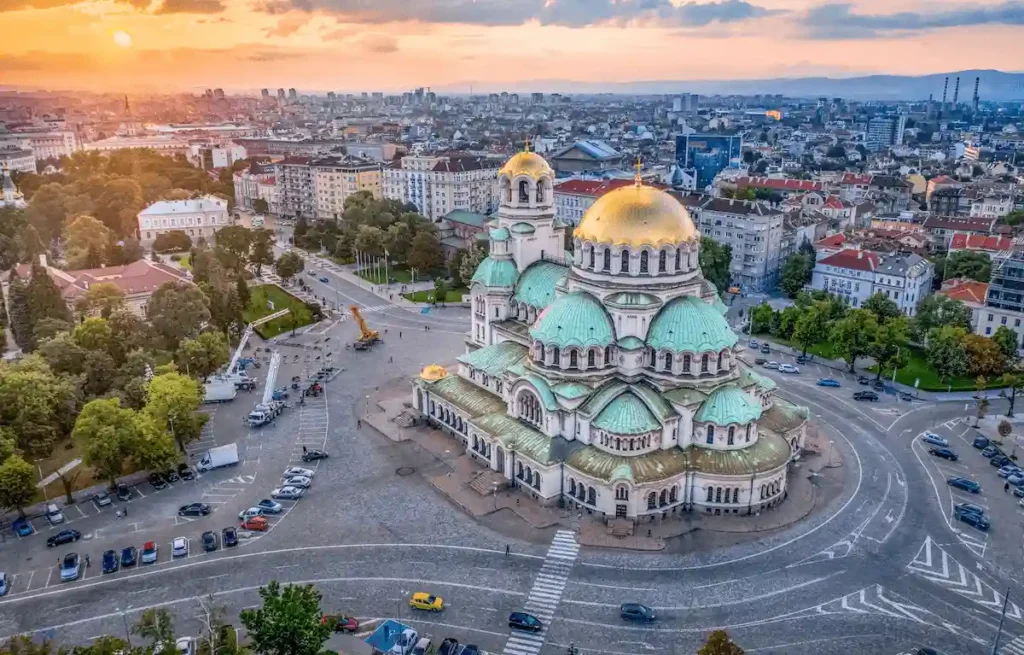
The best historic hotels in Bulgaria are architectural conversions that document the country’s layered history—from Ottoman merchant estates to 1950s socialist monumentalism. Bulgaria’s luxury market suffers from the same Overchoice Problem as the rest of the Balkans: high prices and “boutique” labels often mask generic interiors that erase the very soul travelers seek.
We audited Bulgaria’s inventory and rejected weak renovations, brand-saturated boxes, and properties without verifiable “Past-Life Identity.” This selection focuses exclusively on assets with recorded provenance: former palaces, neoclassical landmarks, and Renaissance merchant houses where the building itself is the destination. This audit saves you time and guarantees immersion in living history, not generic luxury theater.
Sofia’s Monumental Heritage: Socialist Palaces & Belle Époque Icons
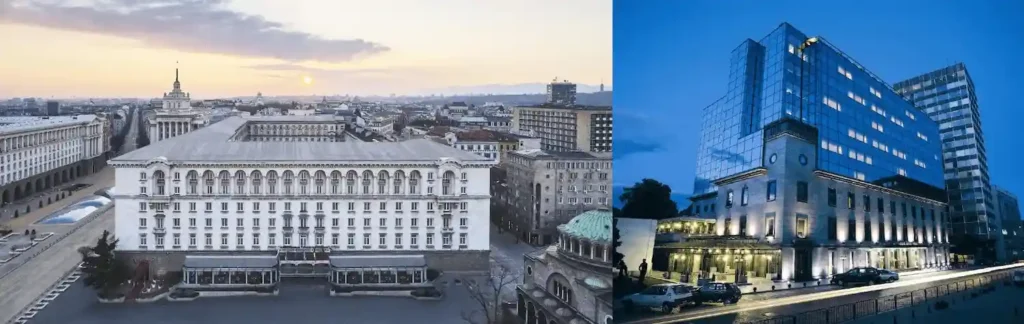
Sofia’s historic hotel inventory divides into two distinct eras: the 1950s socialist monumentalism that dominates the city center, and the rare surviving Belle Époque properties that predate the regime. These are not renovated apartments or rebranded Marriotts—they are buildings with institutional weight, where marble lobbies and original wood inlay signal the city’s most architecturally significant conversions.
Expect grand proportions, preserved craftsmanship, and direct access to Sofia’s Royal Palace gardens and cultural district.
🏛️ Sofia Balkan Palace ★★★★★
The Sofia Balkan Palace is Bulgaria’s most architecturally significant socialist-era landmark, built in 1956 as part of the monumental “Largo” complex that reshaped Sofia’s city center. The hotel sits directly over excavated Roman fortress walls, visible beneath glass floors in the lobby—a preserved layer of Sofia’s imperial past integrated into mid-century monumentalism.
The interiors retain massive marble columns, original 1950s chandeliers, and wood-inlay craftsmanship from Bulgaria’s state-commissioned artisan workshops. Rooms are modernized but maintain the high ceilings and proportions of socialist-era “grand hotel” design. The transition from Sofia’s traffic-heavy boulevards into this marble-and-brass sanctuary is immediate and total—the building’s institutional scale absorbs urban noise. This is the only hotel in Bulgaria where you can stand over Roman ruins while surrounded by 1950s state architecture, a combination no other property can replicate.
Best for: Architecture enthusiasts seeking Bulgaria’s most significant socialist-era landmark with preserved Roman excavations and mid-century design integrity.
Signature Experience: Glass-floor Roman ruins viewing in the lobby, original 1950s state-commission chandeliers, marble-columned ballrooms, modernized rooms with monumental proportions, central location within the UNESCO-protected Largo ensemble.
“Standing over those Roman walls in the lobby—this is why you come to Sofia.” — Martin, BerlinCheck Availability & Rates →
🎨 Grand Hotel Sofia ★★★★★
Grand Hotel Sofia occupies a historic landmark building overlooking the Royal Palace gardens, positioning it as Sofia’s most socially significant address since the early 20th century. The property houses a permanent heritage collection of 400 original Bulgarian oil paintings—the largest curated art collection within any hotel in the Balkans.
The interiors preserve classic grand hotel proportions: high ceilings, expansive lobby volumes, and the original “Grand Café” structural layout that once served Sofia’s cultural elite. Rooms blend contemporary luxury with heritage elements, maintaining the architectural integrity of the building’s original design. The rooftop terrace delivers unobstructed views of Vitosha Mountain and the Royal Palace—a sightline no other Sofia hotel commands. The building’s identity as a cultural institution, not just accommodation, makes it the city’s only hotel where art provenance rivals architectural provenance.
Best for: Art collectors and cultural travelers seeking Sofia’s only hotel with a curated 400-piece Bulgarian art collection and Royal Palace views.
Signature Experience: 400 original Bulgarian paintings across public spaces, rooftop terrace overlooking Royal Palace gardens, preserved Grand Café heritage structure, Sense Spa with mountain-view treatments, direct access to National Gallery.
“That rooftop view at sunset, with Vitosha in the distance—Sofia’s best-kept secret.” — Elena, PragueCheck Availability & Rates →
🕰️ Best Western Plus Bristol Hotel ★★★★
Best Western Plus Bristol Hotel preserves the authentic proportions and facade of a 1920s Sofia boutique landmark, located in the heart of the historic trade district. The building retains the structural integrity of pre-war Sofia’s merchant-class architecture: high ceilings, original masonry echoes, and the compact but elegant lobby layout typical of interwar Balkan hotels. The interiors balance modern comfort with heritage-conscious design, avoiding the generic branding that compromises most chain properties.
The location places you within walking distance of Sofia’s National Theatre and Vitosha Boulevard, the city’s cultural and commercial spine. This is Sofia’s most accessible historic hotel—entry-level pricing without sacrificing architectural authenticity. The property’s strength lies in what it refuses to erase: the building’s 1920s proportions remain intact, a rarity in Sofia’s aggressively modernized hotel market.
Best for: Budget-conscious travelers seeking authentic 1920s architecture in Sofia’s cultural district without luxury price premiums.
Signature Experience: Preserved pre-war facade and lobby proportions, high-ceiling rooms with original masonry, walking access to National Theatre and Vitosha Boulevard, complimentary Bulgarian wine tastings, central historic district location.
“Felt like stepping into 1920s Sofia without the museum treatment—perfectly balanced.” — Andrei, BucharestCheck Availability & Rates →
Black Sea Neoclassical: Varna’s Belle Époque Landmarks
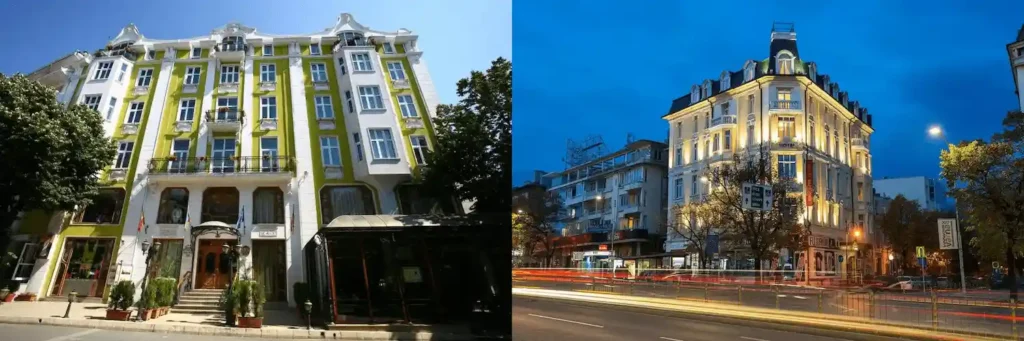
Varna’s historic hotel inventory centers on two surviving neoclassical landmarks from Bulgaria’s Belle Époque era, both predating World War I and both located within steps of the Cathedral and Sea Garden. These properties represent the final architectural echo of Bulgaria’s pre-socialist bourgeoisie—buildings designed for European travelers when Varna was the gateway to the Black Sea Riviera. Expect preserved facades, original elevators, and interiors that prioritize period authenticity over modern spa amenities.
🏛️ Grand Hotel London
Grand Hotel London is Varna’s original luxury landmark, built in 1906 as the city’s first neoclassical hotel for European aristocracy visiting the Black Sea coast. The property preserves the most significant piece of working heritage in Bulgaria’s hospitality sector: the oldest operating wood-and-brass manual elevator in the country, still functional and still used.
The facade retains its French-style neoclassical detailing—pilasters, cornices, and proportions that predate Bulgaria’s socialist architectural rupture. Inside, the hotel maintains original grand plasterwork and period interior volumes, refusing the generic “boutique” renovations that erase historic character. Rooms are compact by modern standards but authentic to the 1900s grand hotel typology.
The location places you opposite Varna Cathedral, the city’s spiritual and architectural anchor. This is the only hotel in Bulgaria where the elevator itself is a heritage artifact, a detail no other property can claim.
Best for: Heritage purists seeking Varna’s most architecturally intact Belle Époque landmark with Bulgaria’s oldest working elevator.
Signature Experience: Operating 1900s wood-and-brass manual elevator, preserved French neoclassical facade and plasterwork, original period interior proportions, Cathedral-facing location, traditional grand hotel atmosphere without modern intrusions.
“That elevator alone is worth the stay—it’s like traveling through 1906 Varna every time you use it.” — Dimitar, ViennaCheck Availability & Rates →
🌹 Boutique Splendid Hotel ★★★
Boutique Splendid Hotel occupies a neoclassical mansion dating to 1911, located opposite Varna Cathedral in the city’s historic heart. The property underwent a complete refurbishment designed to preserve the building’s “classic romantic” 1900s spirit while introducing modern comfort standards. The facade retains its original neoclassical detailing, and interiors maintain high-proportioned rooms with views directly onto the Cathedral and Sea Garden entrance. The hotel’s scale is intimate—this is a mansion conversion, not a grand hotel—creating a residential atmosphere rare in Varna’s coastal hospitality market.
The location is unmatched: you are within a two-minute walk of both the Cathedral and the entrance to the Sea Garden, Varna’s defining public space. This is Varna’s most accessible Belle Époque property, offering heritage architecture at three-star pricing without sacrificing period authenticity.
Best for: Couples seeking intimate neoclassical architecture in Varna’s cultural center with Cathedral views and Sea Garden access.
Signature Experience: Refurbished 1911 mansion with preserved romantic atmosphere, Cathedral-facing rooms with high proportions, original neoclassical facade, two-minute walk to Sea Garden entrance, boutique-scale residential intimacy.
“Waking up to Cathedral bells from that window—pure Varna, no tourist filter.” — Irina, MoscowCheck Availability & Rates →
Renaissance Plovdiv & Regional Stone: Merchant Estates & Revival Architecture
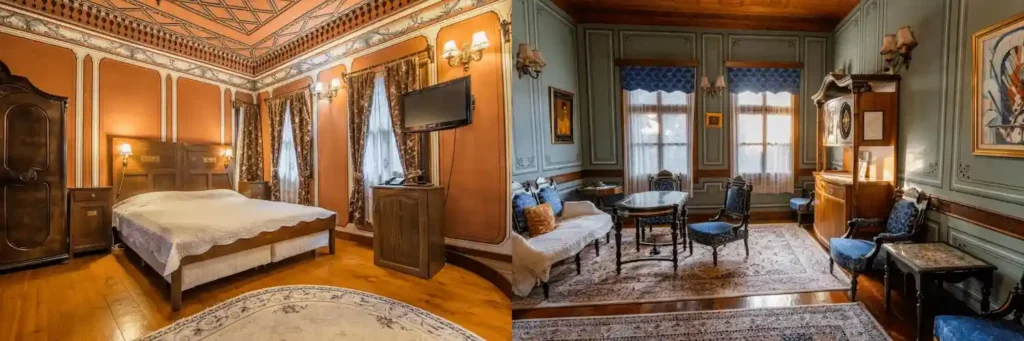
Bulgaria’s inland historic hotels shift from neoclassical formality to the organic architecture of the Bulgarian National Revival period: stone-and-timber merchant estates with hand-painted ceilings and structures that predate the Ottoman decline. Plovdiv’s UNESCO Old Town and Veliko Tarnovo’s Tsarevets district preserve the country’s most authentic examples of 19th-century Bulgarian residential architecture. These are not hotels designed for European travelers—they are converted family estates where the building’s original domestic function remains legible.
🏛️ Old Legends Hotel
Old Legends Hotel occupies a 200-year-old Renaissance merchant estate in Plovdiv’s UNESCO-protected Old Town, representing the most architecturally intact conversion of Bulgarian Revival residential architecture. The building preserves original stone-and-timber masonry—walls two feet thick—and hand-painted wooden ceilings executed by regional craftsmen in the early 19th century.
The interiors retain the house’s original internal layout: a central courtyard, period antiques, and room proportions designed for Plovdiv’s merchant elite. No generic renovation has erased the building’s domestic identity; you are staying in a family estate, not a purpose-built hotel. The location places you at the center of Plovdiv’s Roman Amphitheater district, surrounded by cobblestone streets and Revival-era mansions. This is the only hotel in Bulgaria where every ceiling is a hand-painted artifact, a level of preservation no other property approaches.
Best for: Cultural travelers seeking Bulgaria’s most authentic Renaissance Revival estate with hand-painted ceilings and UNESCO Old Town immersion.
Signature Experience: 200-year-old stone-and-timber estate with original internal layout, hand-painted wooden ceilings by 19th-century regional craftsmen, period antiques throughout, central courtyard with Revival-era ambiance, walking access to Roman Amphitheater.
“Every ceiling tells a story—this isn’t a hotel, it’s a living archive of Bulgarian craft.” — Georgi, SofiaCheck Availability & Rates →
🏔️ Gurko Hotel ★★★
Gurko Hotel preserves authentic 19th-century Bulgarian Revival architecture in Veliko Tarnovo’s historic riverside district, a stone-and-wood landmark designed in the traditional regional style. The structure retains original wooden beams and heavy stone masonry—construction techniques predating Bulgaria’s industrial modernization.
The interiors echo the traditional Bulgarian tavern (Mehana) layout: low ceilings, timber-heavy rooms, and compact proportions that reflect the building’s original function as a regional inn. The hotel refuses modern luxury theater, maintaining the raw materiality of Revival-era architecture. The location offers views of the Tsarevets Fortress and the Yantra River gorge, positioning you within Veliko Tarnovo’s most historically dense district. This is Bulgaria’s most accessible Revival-era hotel—authentic stone-and-timber architecture at three-star pricing, a rare combination in the country’s heritage market.
Best for: Adventurous travelers seeking raw Bulgarian Revival architecture in Veliko Tarnovo’s fortress district with Tsarevets views.
Signature Experience: Original 19th-century stone-and-timber masonry, authentic Bulgarian tavern (Mehana) structure with wooden beams, Tsarevets Fortress and Yantra gorge views, traditional Revival-era room proportions, riverside location in historic district.
“That stone-and-beam room felt like stepping into a 19th-century Bulgarian fortress inn—no pretense, just history.” — Nikola, ZagrebCheck Availability & Rates →
📊 Comparison: Best Historic Hotels in Bulgaria
| Hotel | Location | Wellness & Spa | Dining | Unique Perks | Best For |
|---|---|---|---|---|---|
|
🏛️ Sofia Balkan Palace ★★★★★ |
Sofia, Largo complex |
Modern spa, fitness center |
Bulgarian-European, lobby bar |
Roman ruins beneath glass, 1950s chandeliers |
Socialist architecture, heritage seekers |
|
🎨 Grand Hotel Sofia ★★★★★ |
Sofia, Royal Palace district |
Sense Spa, rooftop wellness |
Grand Café heritage, contemporary dining |
400 Bulgarian paintings, Palace views |
Art collectors, cultural travelers |
|
🏛️ Grand Hotel London |
Varna, Cathedral district |
No spa, heritage focus |
Traditional Bulgarian, period cafe |
1900s manual elevator, neoclassical facade |
Belle Époque purists, elevator enthusiasts |
|
🏛️ Old Legends Hotel |
Plovdiv, UNESCO Old Town |
No spa, courtyard ambiance |
Traditional Bulgarian, courtyard dining |
Hand-painted ceilings, 200-year-old estate |
Renaissance seekers, UNESCO immersion |
❓ FAQ: Best Historic Hotels in Bulgaria
What defines a historic hotel in Bulgaria?
A historic hotel in Bulgaria is a verified architectural conversion with documented provenance—properties built before 1960 that retain original structural elements such as neoclassical facades, socialist-era monumentalism, or Bulgarian Revival masonry. These buildings function as “Past-Life Assets,” where the architecture itself delivers cultural immersion beyond generic luxury branding.
Which Bulgarian city has the best historic hotel selection?
Sofia dominates Bulgaria’s historic hotel inventory with the largest concentration of preserved socialist-era landmarks and Belle Époque properties. Varna offers the best-preserved neoclassical hotels from Bulgaria’s pre-WWI era, while Plovdiv holds the country’s most authentic Renaissance Revival estates within its UNESCO-protected Old Town.
Are Bulgaria’s historic hotels more expensive than modern properties?
Not necessarily. Bulgaria’s historic hotels range from three-star Revival estates to five-star socialist palaces, often priced competitively against generic chain hotels. Properties like Best Western Plus Bristol Hotel and Gurko Hotel deliver authentic period architecture at mid-tier pricing, making heritage accommodation accessible without luxury premiums.
What is the most architecturally significant hotel in Bulgaria?
Sofia Balkan Palace holds the strongest architectural claim—it is Bulgaria’s only hotel built directly over excavated Roman ruins while preserving intact 1950s socialist monumentalism. The combination of layered history (Roman + mid-century) and monumental scale makes it the country’s most institutionally significant hotel asset.
Can I stay in a Bulgarian Revival estate?
Yes. Old Legends Hotel in Plovdiv occupies a 200-year-old Renaissance merchant estate with hand-painted wooden ceilings and original stone-and-timber masonry. Gurko Hotel in Veliko Tarnovo preserves traditional Revival-era tavern architecture with wooden beams and heavy stone construction. Both maintain the domestic layout and materiality of 19th-century Bulgarian residential design.
Do Bulgaria’s historic hotels have modern amenities?
Most Bulgarian historic hotels balance heritage preservation with modern comfort—WiFi, updated bathrooms, and climate control are standard. However, properties like Grand Hotel London prioritize architectural authenticity over spa facilities, while Sofia Balkan Palace and Grand Hotel Sofia integrate full-service wellness centers without compromising historic interiors.
Is Plovdiv or Varna better for historic hotel stays?
Plovdiv offers deeper cultural immersion through UNESCO-protected Renaissance architecture and Roman ruins, ideal for travelers prioritizing inland heritage. Varna delivers Belle Époque seaside elegance with neoclassical hotels near the Black Sea, better suited for travelers combining beach access with historic charm. Sofia remains the strongest option for socialist-era monumentalism and art-focused luxury.
Bulgaria’s Historic Hotels: Choosing the Right Architectural Era
Selecting the best historic hotels in Bulgaria depends on which architectural narrative aligns with your travel intent—socialist monumentalism in Sofia, Belle Époque seaside elegance in Varna, or Renaissance Revival estates in Plovdiv. The properties above represent the most architecturally significant conversions in each category, filtered for verified provenance and structural integrity. Bulgaria’s historic hotel market rewards early booking, especially during summer and cultural festival seasons when availability at landmark properties tightens quickly.
Compare Bulgaria’s heritage hotels with neighboring Balkan markets—best historic hotels in Greece offers Venetian fortresses and Ottoman mansions, while best historic hotels in Romania preserves Austro-Hungarian palaces and Saxon guild houses.
For more curated itineraries and luxury-focused travel insights, visit Your Luxury Guide. For official travel information and destination updates, visit Bulgaria tourism-info.
Booking your Bulgaria hotel secures access to the Balkans’ most undervalued historic conversions—properties where socialist palaces, Belle Époque landmarks, and Renaissance estates deliver institutional-level architecture without Western European price inflation.
Your Luxury Guide — Where Exceptional Travel Begins.