Your Luxury Guide

"Founder of ExploreSlovenija — sharing budget stays, hidden gems, hikes, and authentic experiences for backpackers, digital nomads, and travelers. Passionate about nature and community travel in Slovenia."

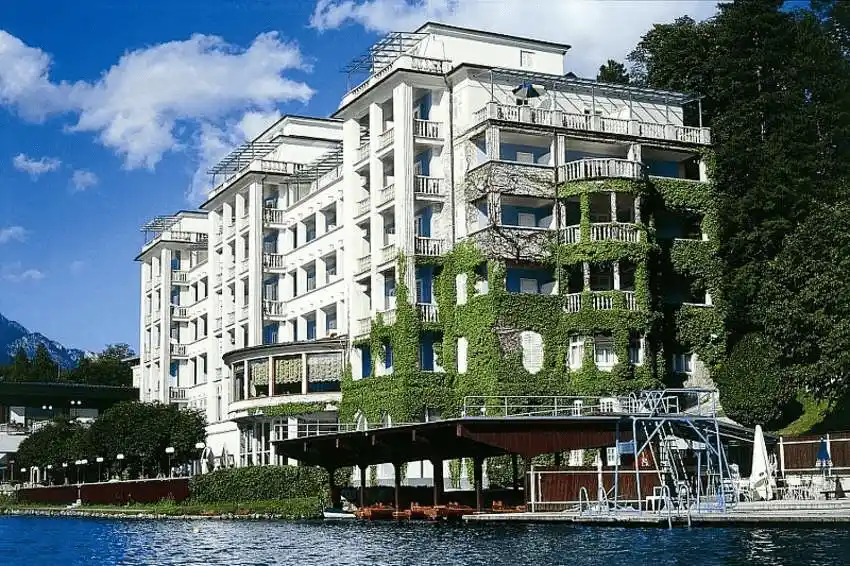
The white modernist facade of Grand Hotel Toplice covered in green ivy, situated directly on the shores of Lake Bled with a private wooden boathouse in the foreground.

Grand Hotel Toplice: The 1931 Thermal Spring Estate Where European Royalty Gathered

Grand Hotel Toplice commands Lake Bled’s most exclusive shoreline position, built directly above a natural 22°C thermal spring that has drawn Europe’s elite since 1854. Franz Baumgartner’s 1931 white modernist structure replaced the original Louisenbad bathhouse, creating Yugoslavia’s premier diplomatic residence where King Alexander I held court and international treaties were signed. The property’s private […]

Grand Hotel Toplice: The 1931 Thermal Spring Estate Where European Royalty Gathered Read More »

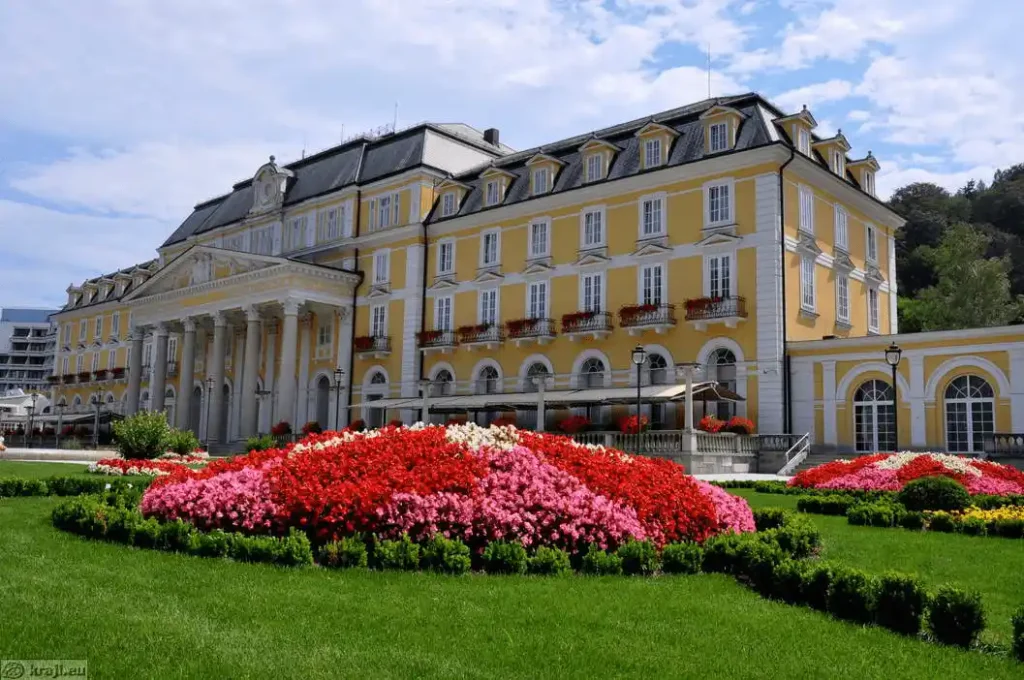
The yellow neo-Baroque facade of Grand Hotel Rogaška featuring classical columns and manicured flower beds in the Rogaška Slatina spa park.

Grand Hotel Rogaška: Where Hapsburg Court Society Commanded Slovenia’s Spa Capital

The Grand Hotel Rogaška occupies the architectural throne of Rogaška Slatina, a town founded on medicinal spring water discovery in 1665. This is verified institutional power. The hotel complex governs a 10,000-square-meter neo-Baroque park, three interconnected historic wings (the main Superior building, Strossmayer Wing from 1848, and Styria Wing), and direct territorial control over Europe’s

Grand Hotel Rogaška: Where Hapsburg Court Society Commanded Slovenia’s Spa Capital Read More »

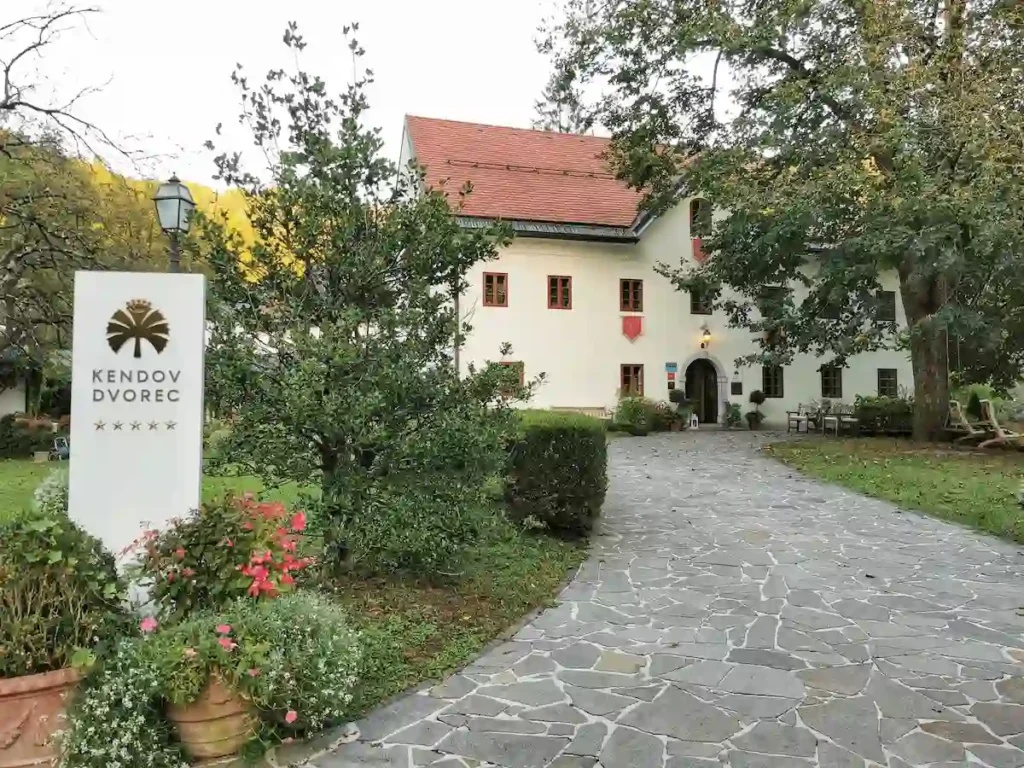
The stone entrance path leading to the white-walled historic manor of Kendov Dvorec, a member of Relais & Châteaux in the Slovenian countryside.

Kendov Dvorec: 1377 Fortified Manor Commanding Idrijca Valley

Since 1377, Kendov Dvorec has stood as the territorial seat of the Kenda dynasty, a fortified estate that governed the timber trade and mercury wealth of Slovenia’s Alpine interior. This is not a countryside escape—this is the original power center of Spodnja Idrija, a 12th-century pilgrimage route village where the local aristocracy commanded forestry, mining

Kendov Dvorec: 1377 Fortified Manor Commanding Idrijca Valley Read More »

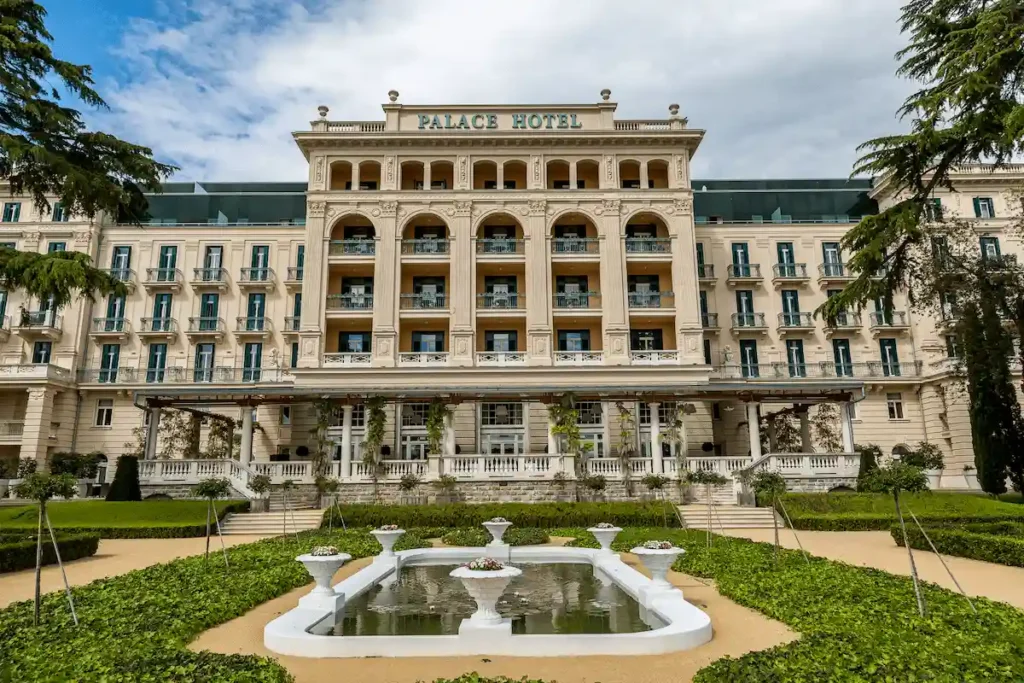
The grand 1910 Austro-Hungarian facade of Kempinski Palace Portorož overlooking a manicured heritage park and stone fountain on the Slovenian coast.

Hotel Palace Portorož: The Archduke’s Command Post on Slovenia’s Austrian Riviera

In 1910, when Johannes Eustacchio completed the Hotel Palace Portorož, he delivered the Austro-Hungarian Empire its answer to Venice’s grandest addresses. Archduke Franz Ferdinand—heir to the throne—arrived as one of its first guests, establishing the property as the coastal seat for imperial authority along what was then known as the Austrian Riviera. Today, the Hotel

Hotel Palace Portorož: The Archduke’s Command Post on Slovenia’s Austrian Riviera Read More »

The grand L'Esterel lounge at Hotel Le Plaza Brussels featuring a circular trompe-l'œil sky ceiling, marble columns, and 1930s-inspired red velvet seating.

Hotel Le Plaza Brussels: 1930 Art Deco Command Center Where European Power Assembled

Hotel Le Plaza Brussels occupies Michel Polak’s 1930 architectural statement—a deliberate replica of Paris’s George V transplanted to Belgium’s capital as a seat of French-style authority. During WWII, military command requisitioned the reinforced structure for strategic headquarters. After two decades of closure, the 1996 restoration returned the 1,300-square-meter cinema palace to operational grandeur. Presidential guests

Hotel Le Plaza Brussels: 1930 Art Deco Command Center Where European Power Assembled Read More »

A contemporary guest room at The Dominican Brussels, a Member of Design Hotels featuring a large reproduction of a Jacques-Louis David painting and modern monastic-inspired furniture.

The Dominican Brussels: Where Jacques-Louis David Painted His Final Canvas in Exile

The Dominican Brussels stands on the foundations of a 15th-century Dominican abbey, where the exiled French painter Jacques-Louis David lived and died in 1825 after completing The Mars Disarmed by Venus in his final studio. The hotel preserves the original cloister layout, monastic archways, and the central courtyard where monks once walked in silent contemplation.

The Dominican Brussels: Where Jacques-Louis David Painted His Final Canvas in Exile Read More »

A side-by-side view of the Corinthia Grand Hotel Astoria Brussels interiors, showing the white stone-carved reception area and the grand Palm Court lounge featuring a massive 1910-original stained-glass skylight.

Corinthia Grand Hotel Astoria Brussels: Royal Command Post in the Capital

Corinthia Grand Hotel Astoria Brussels occupies King Leopold II’s 1910 Beaux-Arts commission on Rue Royale—a structure designed as Belgium’s architectural proclamation for the Brussels International Exposition. Henri Van Dievoet’s Louis XVI façade conceals a lineage of wartime command, Royal receptions, and literary immortality. The building served as headquarters for both German and British forces during

Corinthia Grand Hotel Astoria Brussels: Royal Command Post in the Capital Read More »

The interior of Bar Magritte at Hotel Amigo Brussels, featuring a long fluted brass bar, velvet cocktail seating in jewel tones, and expansive colorful wall murals inspired by the surrealist works of René Magritte.

Hotel Amigo Brussels: Spanish Renaissance Authority on Medieval Foundations

Hotel Amigo Brussels commands the 1522 Spanish jail site where soldiers coined “Amigo” from the Flemish Vrunte—transforming linguistic confusion into Brussels nomenclature. The 16th-century red-brick structure rises on 14th-century merchant house foundations that shaped the original Grand Place district. The 1958 World Expo conversion retained the stepped-gable footprint while embedding 17th-century basalt street stones in

Hotel Amigo Brussels: Spanish Renaissance Authority on Medieval Foundations Read More »

A luxury suite at Widder Hotel Zurich featuring original 14th-century stone walls and wood beams paired with 20th-century designer furniture.

Widder Hotel Zurich: Where Nine Medieval Houses Command the Augustiner Quarter

Widder Hotel Zurich is not a hotel—it is an architectural empire. Nine medieval townhouses, their stone foundations laid in the 14th century above 2,000-year-old Roman and Celtic ruins, were fused into a single structure through a decade-long restoration by architect Tilla Theus. Completed in 1995, this transformation required over 1,000 specialists to preserve 15th-century frescoes

Widder Hotel Zurich: Where Nine Medieval Houses Command the Augustiner Quarter Read More »

The iconic "Le Hall" lobby at Baur au Lac, featuring indoor trees, plush blue velvet seating, and a grand crystal chandelier beneath a glass dome.

Baur au Lac Zurich: 180 Years of Command at the End of Bahnhofstrasse

Baur au Lac is not a hotel that emerged from the luxury market—it created the luxury market. Opened in 1844 by Johannes Baur as a private lakeside villa, this Neoclassical estate at the southern terminus of Bahnhofstrasse has remained in the founding family’s hands for seven consecutive generations. Its 1,400 sqm private park is the

Baur au Lac Zurich: 180 Years of Command at the End of Bahnhofstrasse Read More »