Your Luxury Guide

"Founder of ExploreSlovenija — sharing budget stays, hidden gems, hikes, and authentic experiences for backpackers, digital nomads, and travelers. Passionate about nature and community travel in Slovenia."

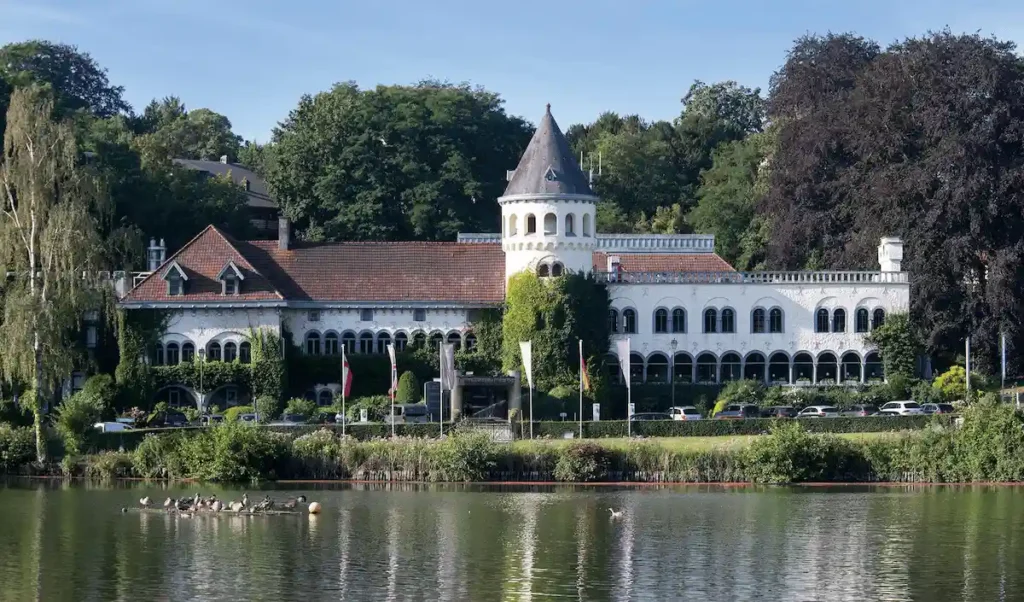
The white-walled facade of Martin's Château du Lac in Genval, featuring a central ivy-clad turret, red-tiled roofing, and arched windows overlooking the tranquil lake and surrounding greenery.

Martin’s Château Du Lac – Where Belgian Royalty Commanded the Lake

Martin’s Château Du Lac occupies the 1905 estate of Count Charles-Alexis de Hemricourt de Grunne, First Equerry to King Leopold II. This wasn’t a ceremonial appointment—it positioned the Count as the sovereign’s personal military commander and trusted confidant. The property was engineered as a lakeside seat of command, where the Count conducted royal business away […]

Martin’s Château Du Lac – Where Belgian Royalty Commanded the Lake Read More »
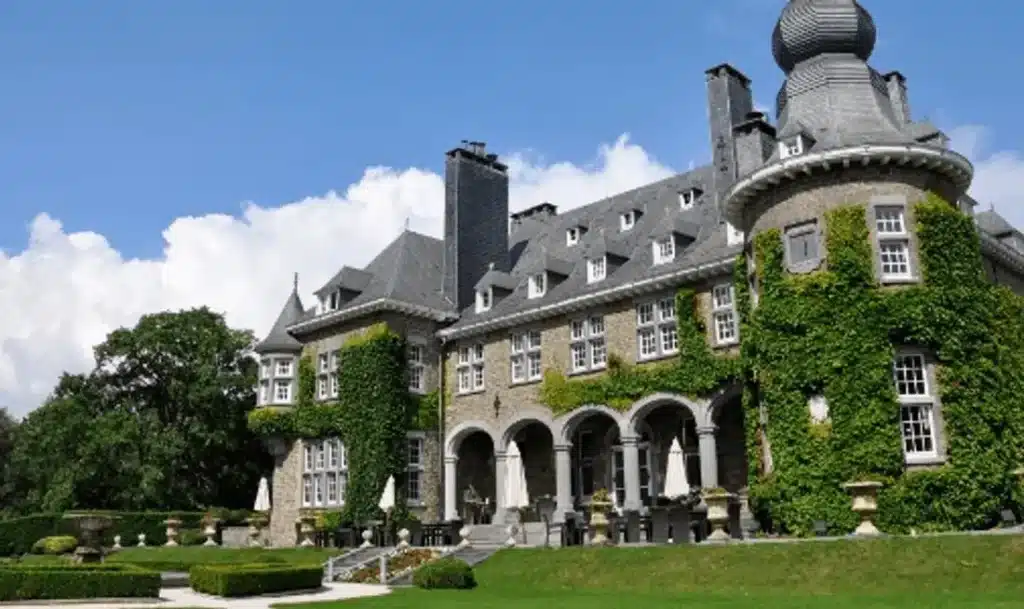
The stone facade of Manoir de Lébioles in the Belgian Ardennes, featuring ivy-covered turrets, a slate roof with dormer windows, and a formal stone terrace overlooking manicured gardens.

Manoir de Lébioles: Belgian Royal Hunting Estate Hotel in the Ardennes

Manoir de Lébioles commands 1904 royal hunting grounds where Belgium’s King Leopold II exercised territorial sovereignty. This estate transformed sovereign wilderness into a luxury manor, where guests now inhabit the private domain that once served absolute monarchy. The property translates 25 hectares of enclosed forest into a contemporary seat of territorial exclusivity, where best castle

Manoir de Lébioles: Belgian Royal Hunting Estate Hotel in the Ardennes Read More »

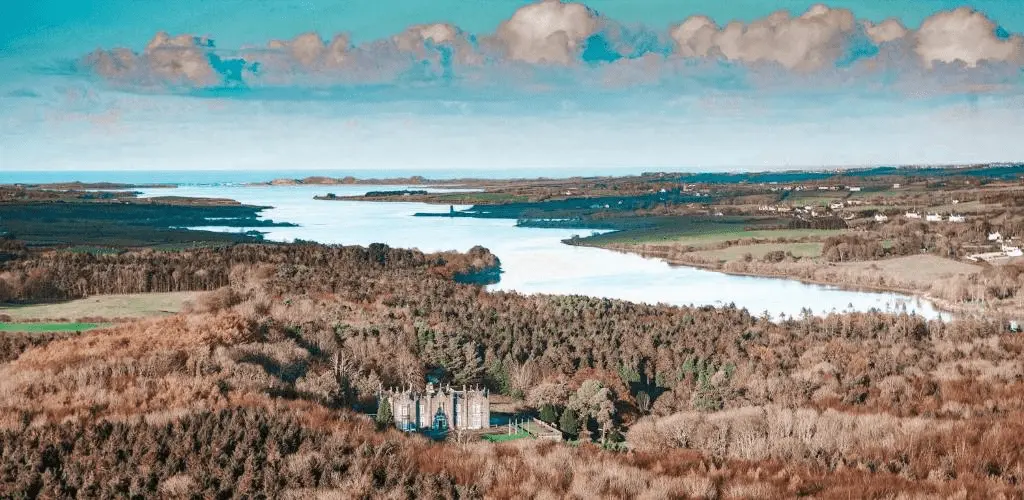
An expansive aerial view of Belleek Castle nestled within dense forestry along the banks of the River Moy estuary, illustrating the property's isolated territorial command in County Mayo.

Belleek Castle County Mayo: Where Victorian Baronial Authority Commands the Moy

Built in 1831 as the private seat of Sir Arthur Edward Knox, Belleek Castle represents the territorial command of Victorian Ireland’s landed gentry. The Gothic Revival fortress, positioned on the River Moy’s strategic banks, functioned as the administrative center for one of County Mayo’s most influential estates. Today, the four-star property preserves the baronial architecture

Belleek Castle County Mayo: Where Victorian Baronial Authority Commands the Moy Read More »

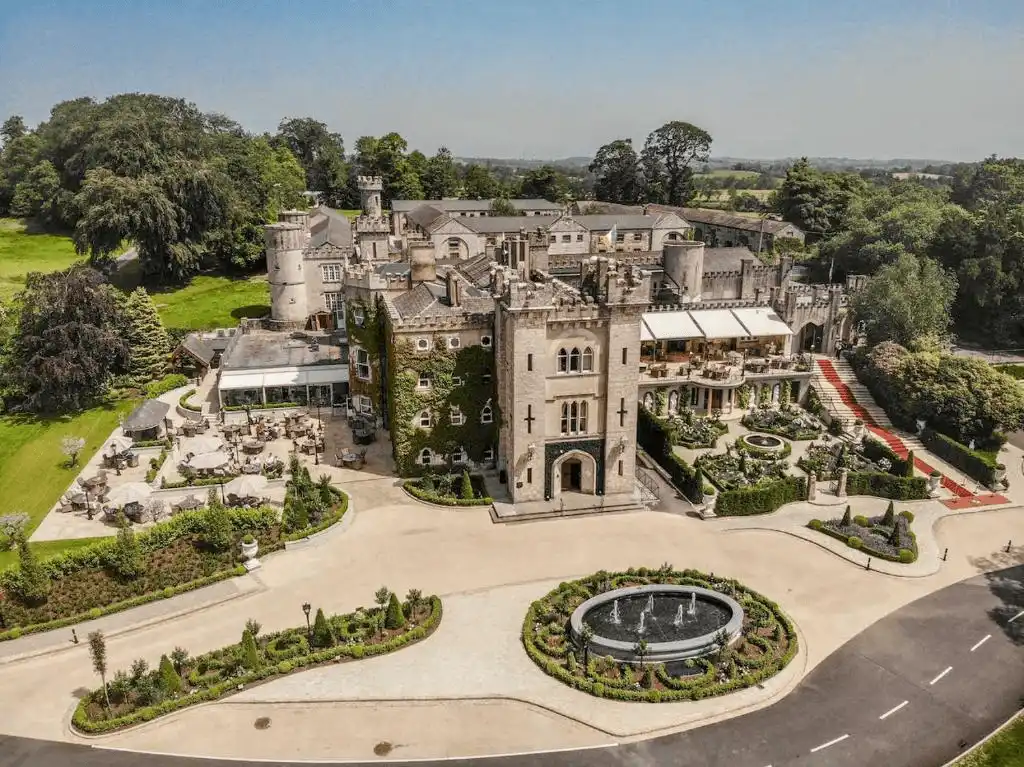
An aerial perspective of Cabra Castle Hotel showing the expansive Neo-Gothic stone architecture, formal gardens with a circular fountain, and the grand red-carpeted entrance staircase.

Cabra Castle Hotel: Where Norman Command Meets Modern Authority

The Cabra Castle Hotel functions as a preserved Victorian manor where guests occupy the architectural seat of Irish landed authority. Built in 1760 and expanded throughout the 19th century, this estate translates 260 years of documented gentry residence into modern exclusivity across 100 acres of private parkland. The building’s stone facade and commanding hilltop position

Cabra Castle Hotel: Where Norman Command Meets Modern Authority Read More »

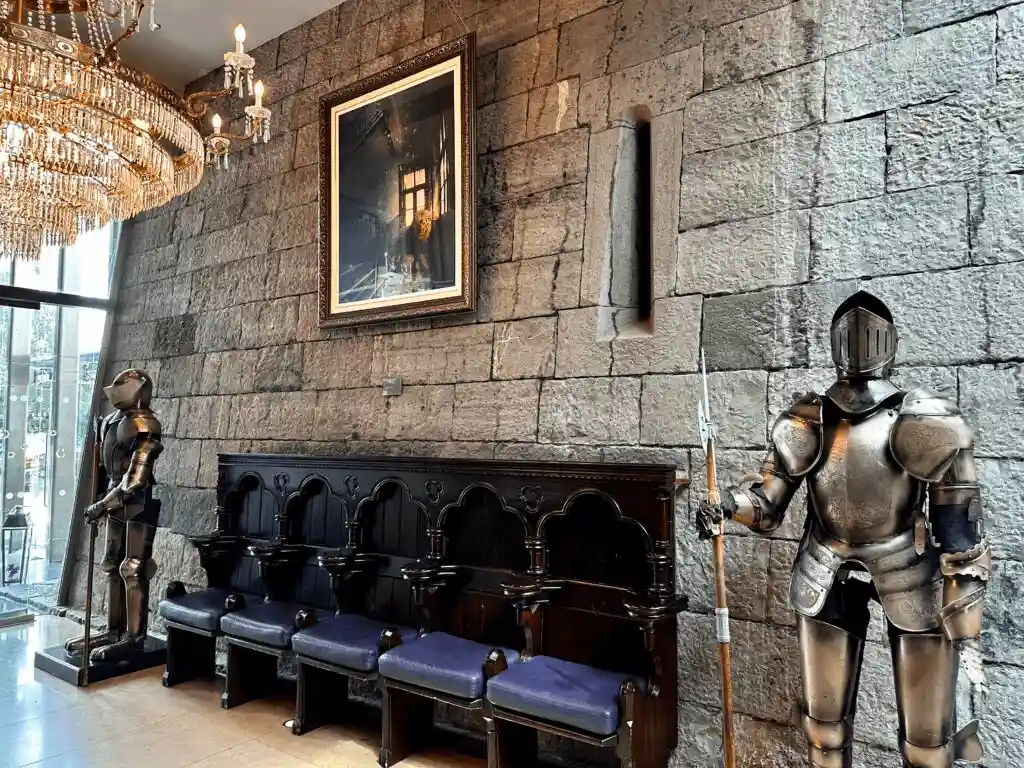
The interior of Clontarf Castle Hotel featuring original stone walls with defensive arrow-loop windows, suits of plate armour, and a carved wooden settle.

Clontarf Castle Hotel Dublin: Where Viking Defeat Built Ireland’s Sovereign Legacy

Clontarf Castle Hotel occupies the precise territorial command point where Brian Boru’s forces expelled Norse occupation in 1014, the military victory that ended 200 years of Viking rule and established Irish High Kingship. The current castellated structure, commissioned in 1835 by the Vernon family on 12th-century foundations, translates medieval fortress authority into 111 guest suites

Clontarf Castle Hotel Dublin: Where Viking Defeat Built Ireland’s Sovereign Legacy Read More »

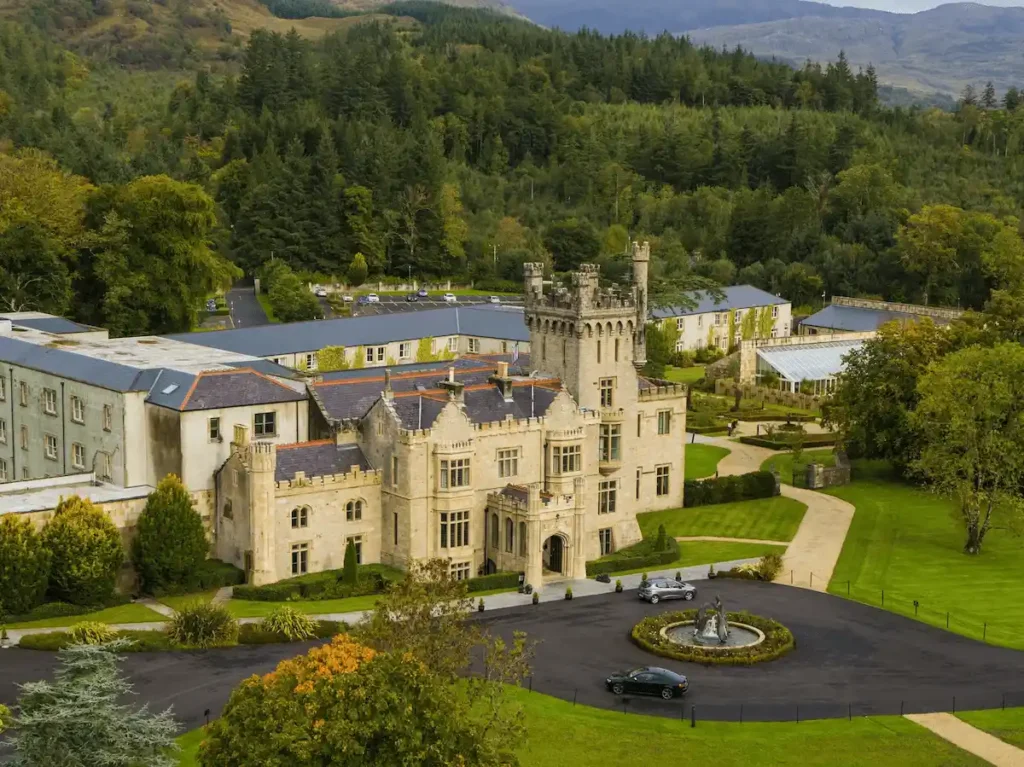
The 19th-century Tudor-Baronial limestone architecture of Lough Eske Castle showcasing its meticulously restored central tower, ornate crenelated battlements, and original defensive stonework.

Lough Eske Castle Ireland: Where O’Donnell Authority Commands the Lake

Lough Eske Castle stands as Donegal’s supreme territorial seat—a 1474 O’Donnell stronghold rebuilt into Ireland’s most commanding lakeside estate. This is not decorative heritage. The original fortress controlled the region’s water access and mountain passes for centuries. Today’s best castle hotels in Ireland preserve that geographic dominance, but few occupy the strategic lakeside position that

Lough Eske Castle Ireland: Where O’Donnell Authority Commands the Lake Read More »

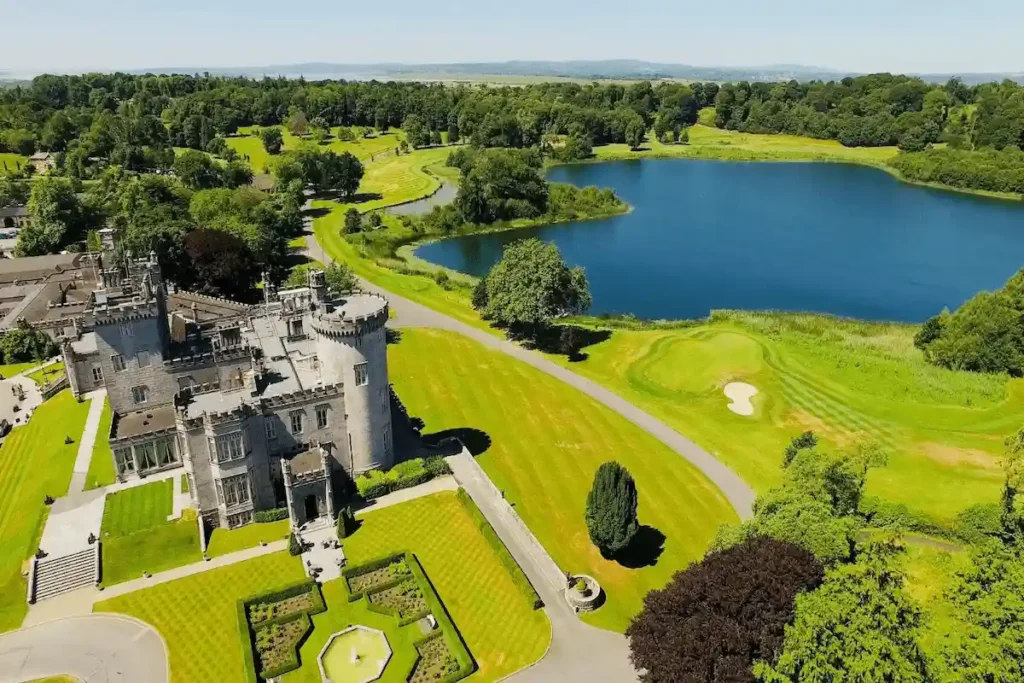
The 19th-century Neo-Gothic limestone facade of Dromoland Castle featuring its dramatic crenelated battlements and original baronial stonework mirrored in the 24-acre Lough Dromoland lake view.

Dromoland Castle: The O’Brien Dynasty’s Ancestral Fortress in County Clare

For over four centuries, Dromoland Castle served as the fortified seat of the O’Brien clan—direct descendants of Brian Boru, the High King who unified Ireland in 1002. The castle’s 16th-century origins, expanded into a Gothic Revival masterpiece in the 1820s, represent unbroken territorial authority. Today’s guest occupies the same stone halls where Irish nobility negotiated

Dromoland Castle: The O’Brien Dynasty’s Ancestral Fortress in County Clare Read More »

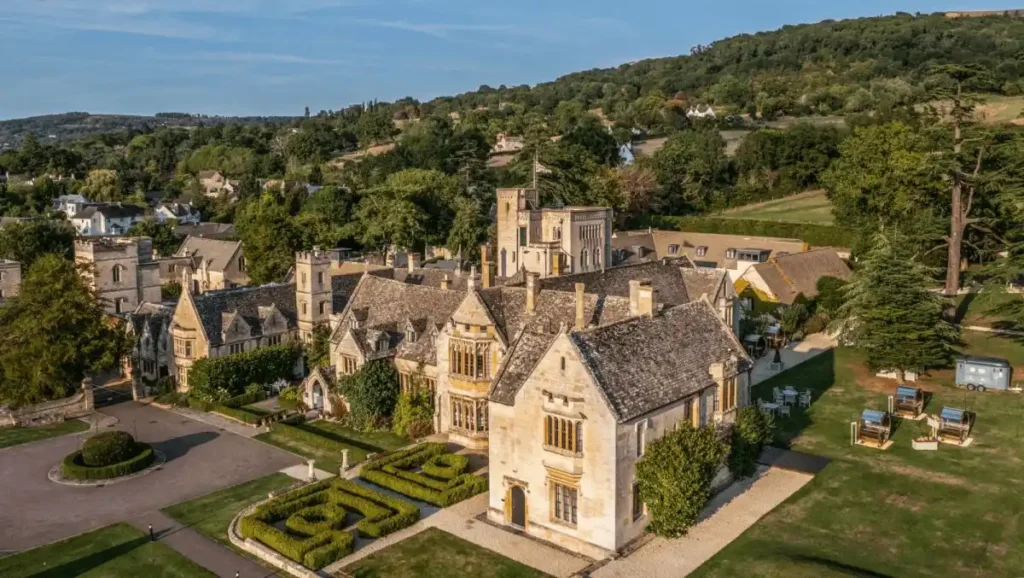
The 15th-century Cotswold stone masonry of Ellenborough Park, showing the historic manor facade and its architectural connection to the surrounding estate.

Ellenborough Park: Five Centuries of Cotswold Command

For over 500 years, the Ellenborough Park has functioned as a seat of territorial authority in the Cotswolds, its stone wings anchoring 90 acres of documented parkland since the 15th century. The manor’s verified lineage—from Tudor foundation through Victorian expansion—establishes a stay defined not by standard luxury, but by inhabiting a property where generations of

Ellenborough Park: Five Centuries of Cotswold Command Read More »

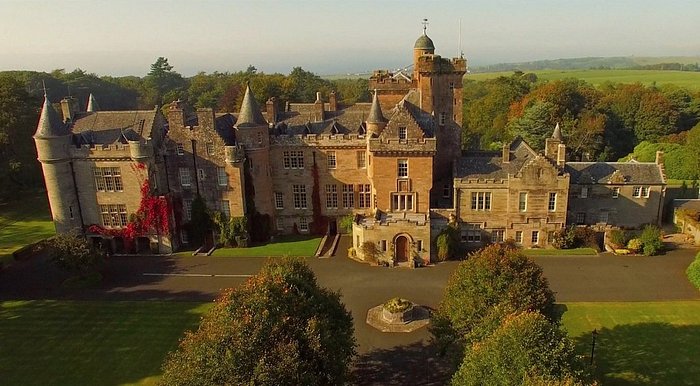
The 19th-century sandstone Scottish Baronial facade of Glenapp Castle, featuring David Bryce’s signature turrets and crenellations overlooking the Irish Sea.

Glenapp Castle: Scotland’s 19th-Century Baronial Command Reborn as Elite Estate Hotel

Glenapp Castle stands as Scotland’s definitive baronial fortress reimagined for sovereign-grade hospitality. Built in 1870 as the Innes-Ker family’s territorial seat, this 36-acre Ayrshire estate commanded coastal dominance through Victorian-era engineering—17-foot stone walls, turret observation points, and strategic positioning above the Firth of Clyde. Today’s 17 suites occupy the chambers where Scottish landed gentry exercised

Glenapp Castle: Scotland’s 19th-Century Baronial Command Reborn as Elite Estate Hotel Read More »

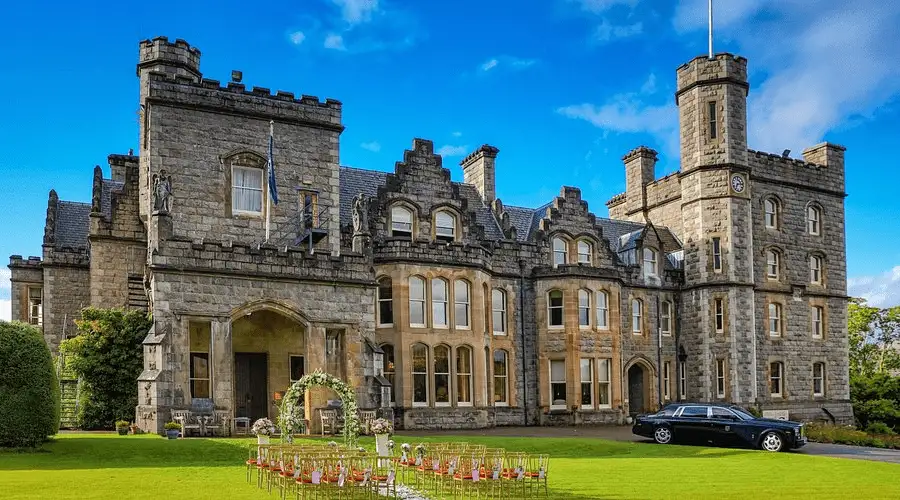
The 19th-century Scottish Baronial facade of Inverlochy Castle Hotel, featuring dove-grey stone turrets at the foot of Ben Nevis.

Inverlochy Castle Hotel: Queen Victoria’s Highland Sovereign Seat

Inverlochy Castle Hotel stands as the definitive Highland power seat where Queen Victoria declared she “never saw a lovelier or more romantic spot.” Built in 1863 by the first Lord Abinger during the apex of Scottish Baronial revival, this estate commands 500 acres beneath Ben Nevis—Britain’s highest territorial marker. The castle synthesizes Grand Tour architectural

Inverlochy Castle Hotel: Queen Victoria’s Highland Sovereign Seat Read More »